When a Painting Begins With a Story
Some commissions begin with a photograph. Others begin with a place, a memory, a conversation, or a collection of details that mean something deeply personal to the collector.
Carried by the Trade Winds began that way.
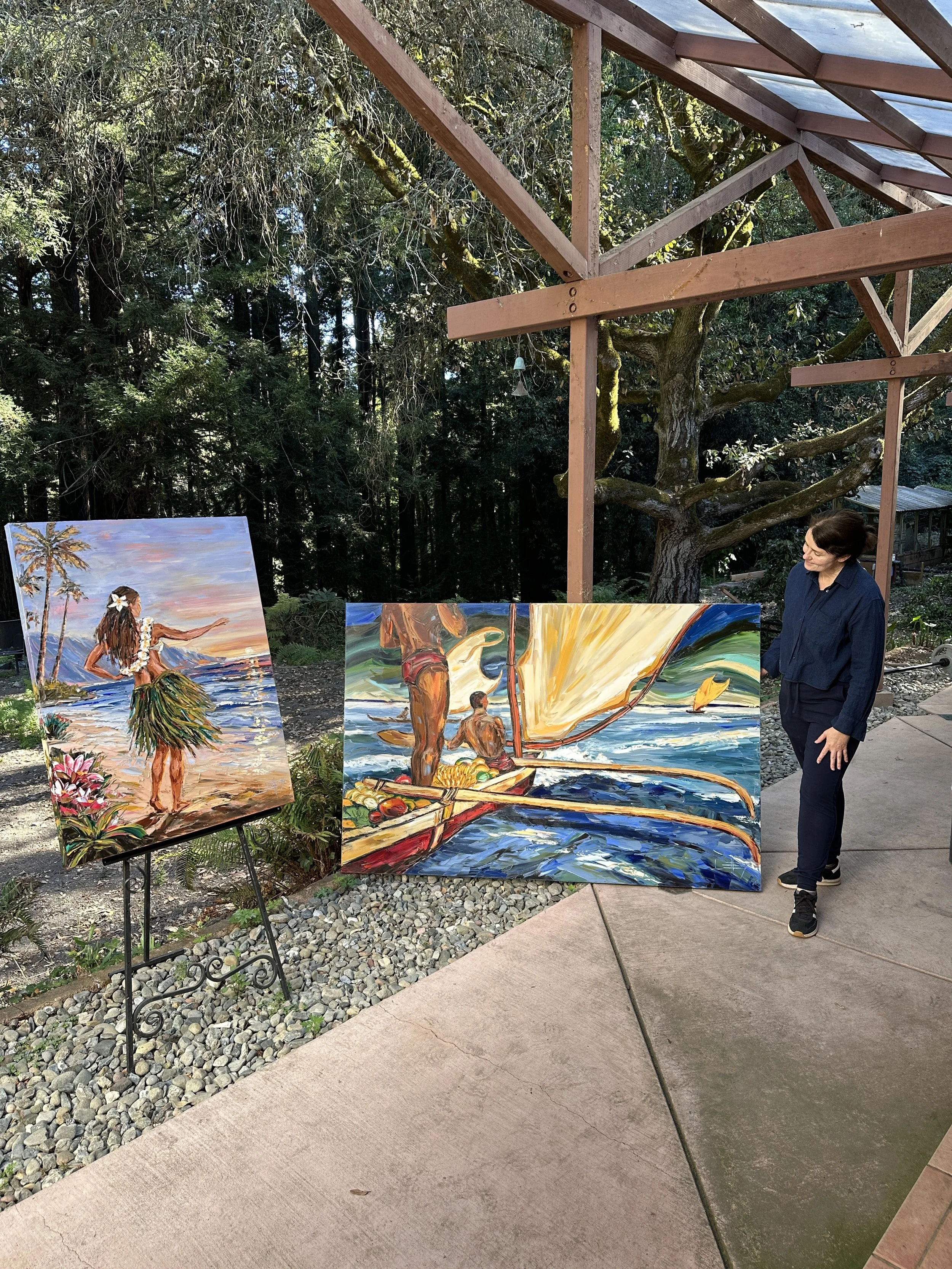
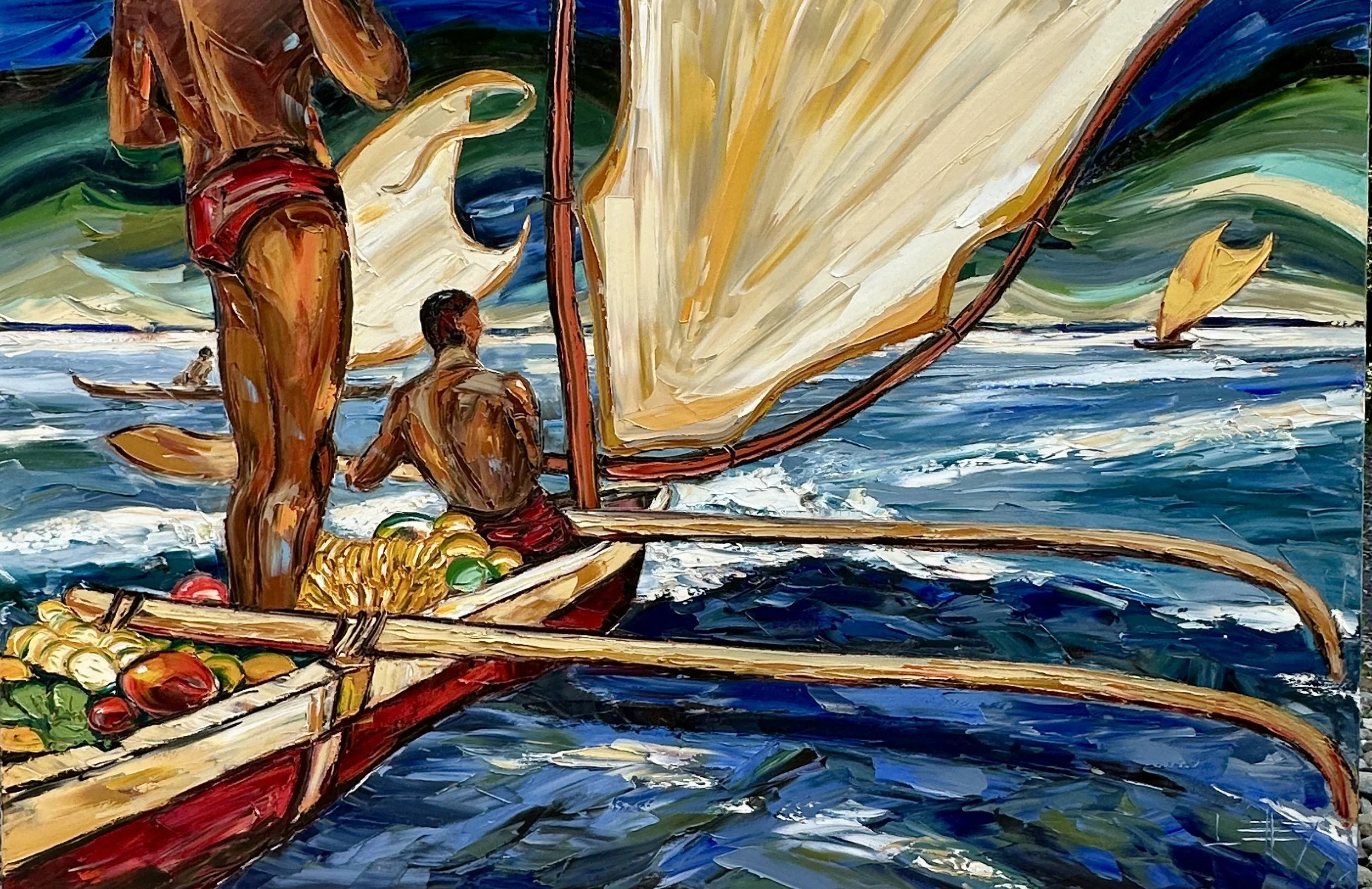
This 48 × 72 inch Kauaʻi-inspired commission developed through conversations, historical imagery, and personal reference material. Rather than reproduce a single photograph, I brought those elements together into an original composition centered on movement, companionship, and place.
A monumental cream sail rises above an outrigger canoe carrying figures, provisions, and island fruit. Beyond it, the mountains of Kauaʻi emerge through atmospheric color while distant sails and shifting water create movement across the Pacific.
One of the most interesting challenges was incorporating substantial human figures while still allowing the landscape to remain dominant. I paint almost entirely with palette knives, so the figures are built from the same thick, sculptural passages of oil paint as the ocean, sky, and mountains. Up close, they dissolve into abstract marks of color and texture. From across the room, they resolve into a fully inhabited scene.
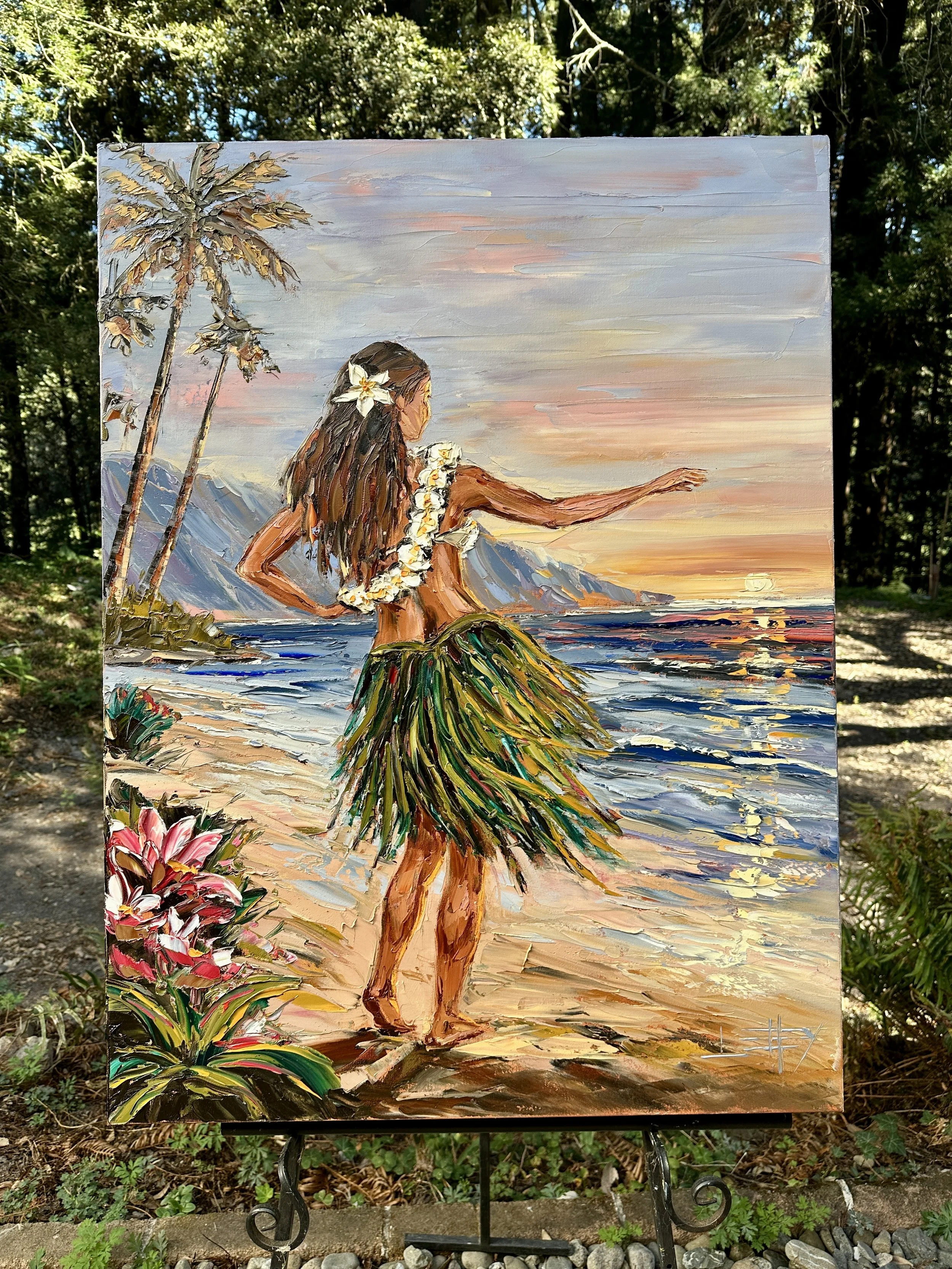
The companion painting, Hula at Sunset, takes a more intimate approach. The dancer is a loose interpretation of my collector’s wife, placed within the landscape rather than painted as a formal portrait. That distinction is important to the way I approach this kind of work: the person becomes part of the atmosphere and story rather than something separate from it.
These paintings helped clarify a direction I had already begun exploring in my studio: narrative landscape commissions.
They are still landscape paintings first. But alongside the coastline, water, mountains, trees, or architecture, there may also be a journey, an activity, a family memory, a meaningful property, a boat, or a loosely rendered human presence.
I’m less interested in copying a reference exactly than in understanding what matters about it and translating that into paint.
That might mean the light on a favorite stretch of coastline. A sailing memory. A golf course tied to a particular chapter of someone’s life. A place a family returns to year after year.
The goal is not simply to record what something looked like.
It is to make a painting that carries some of what the place meant.
If you have a meaningful place or story you’ve been thinking about turning into an original painting, you can explore more of my Commission Stories or learn about the commission process on my website.