Why California Poppies Never Go Out of Style
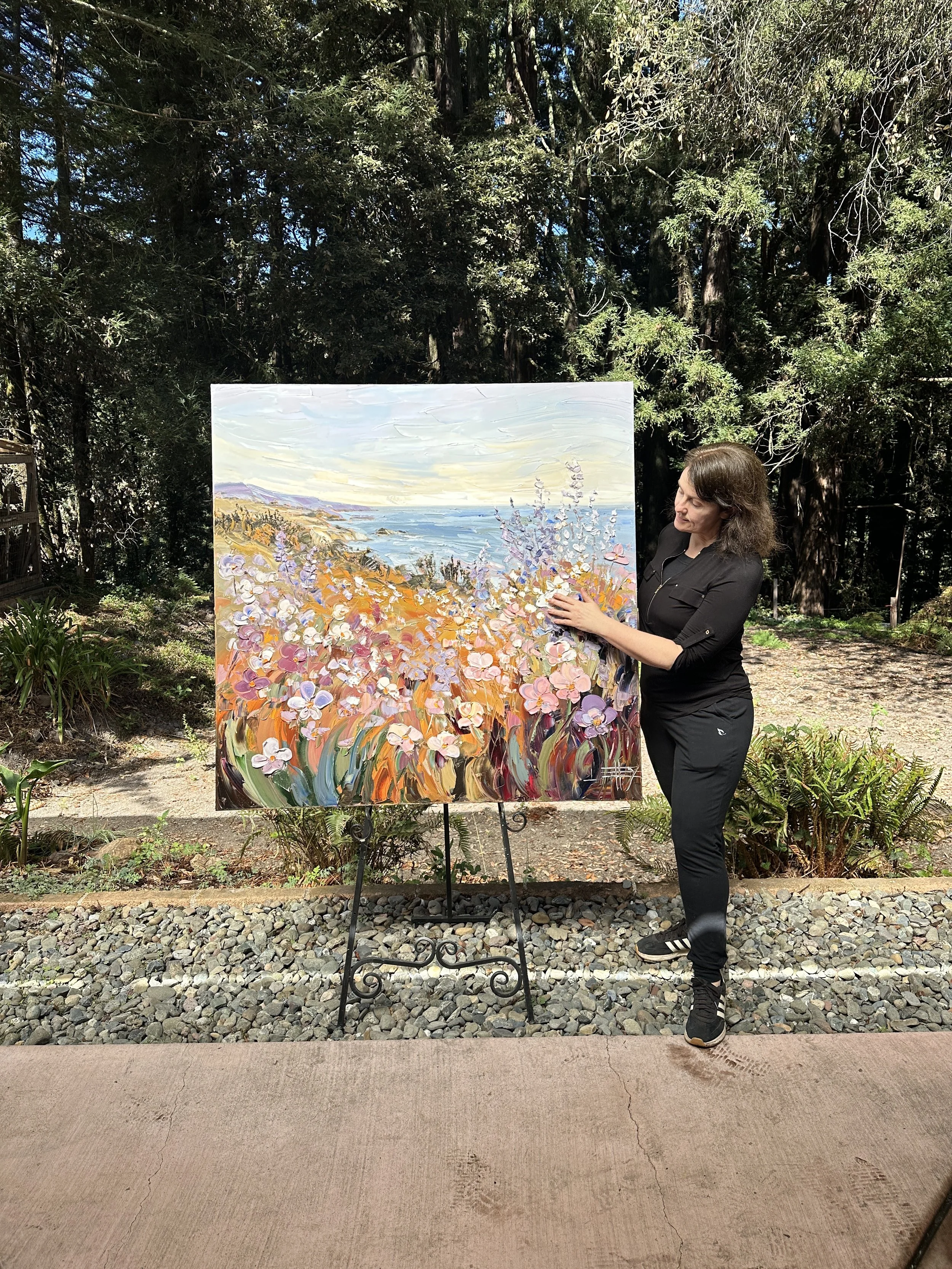
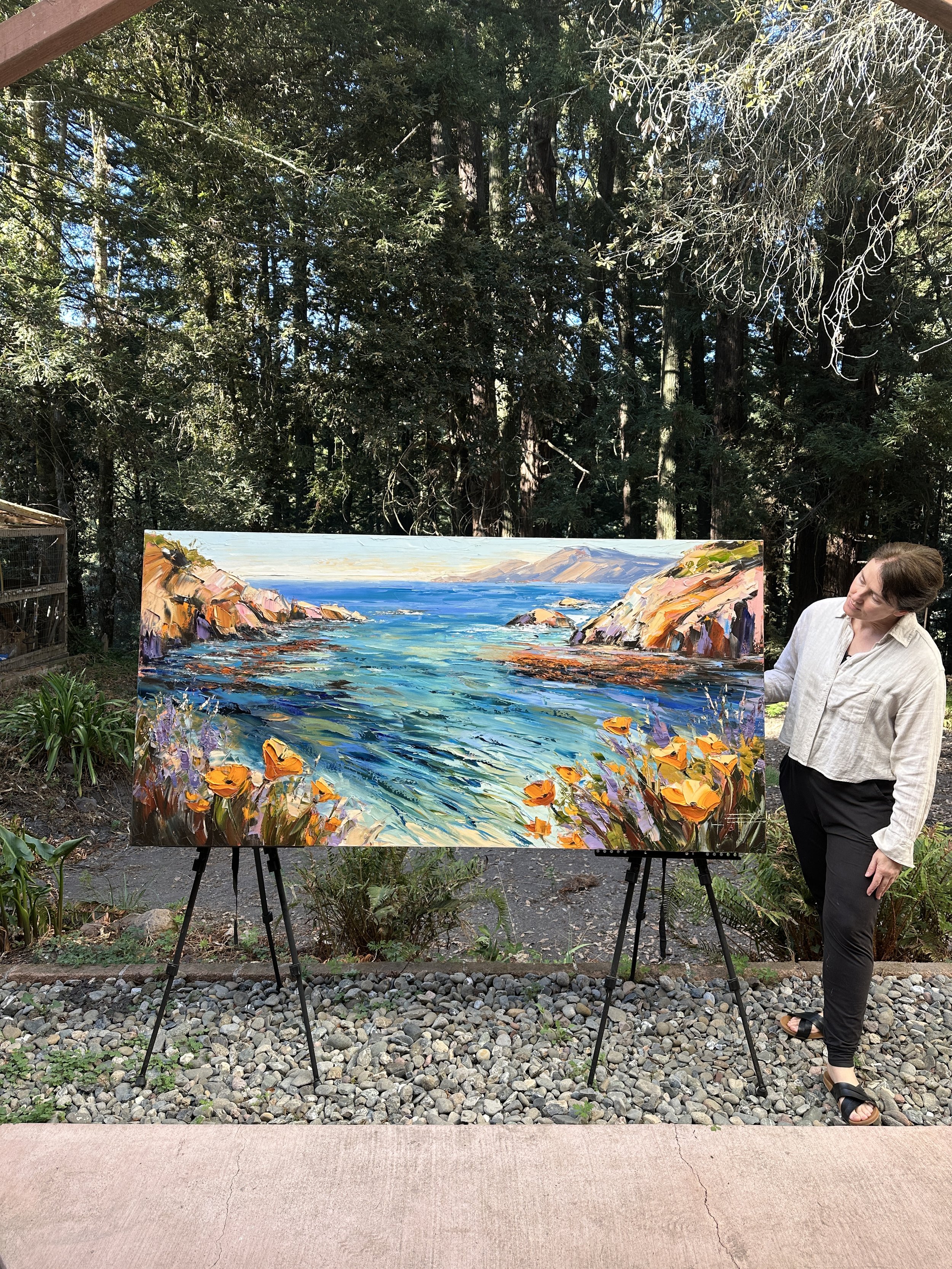
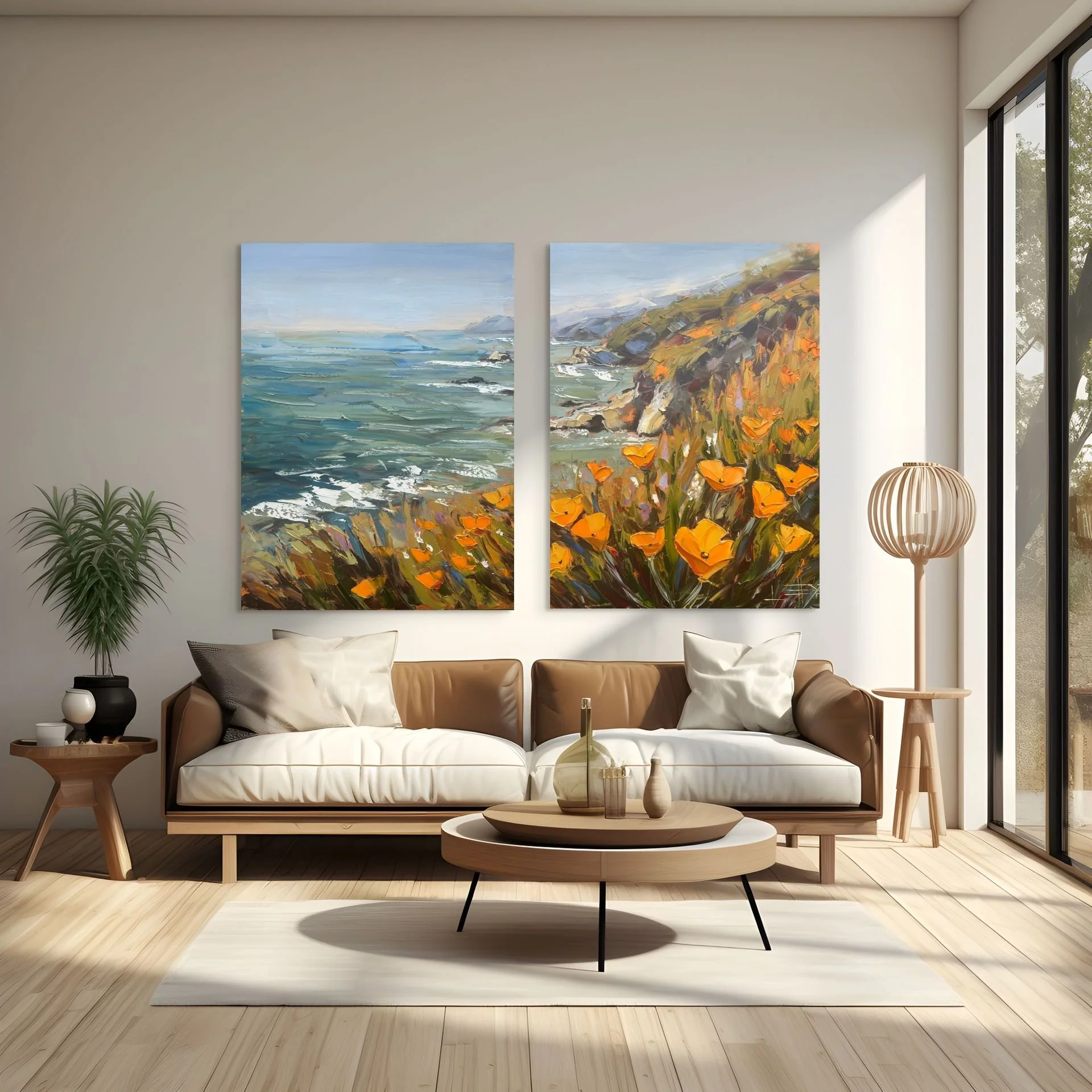
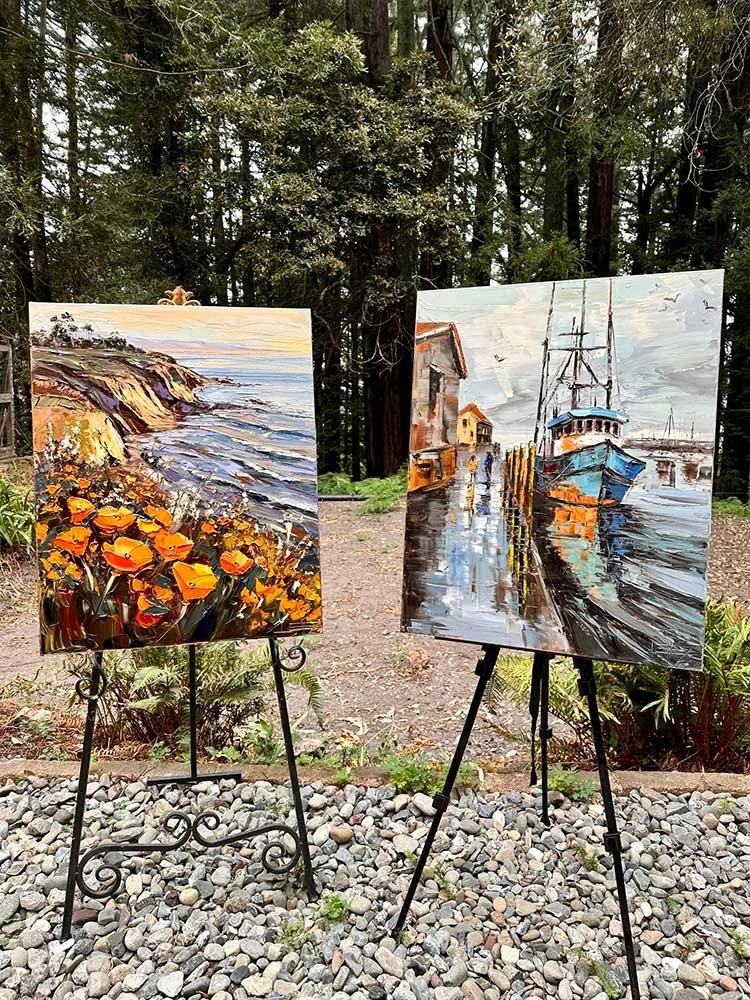
From sunlit coastal bluffs to rolling hillsides, California poppies have become one of the state's most enduring symbols. Their vibrant color, effortless beauty, and timeless connection to the landscape continue to inspire collectors and artists alike. Discover why these iconic blooms never go out of style—and why they remain a beloved subject in California coastal art.
Few flowers are as closely connected to California as the golden poppy.
From coastal hillsides to mountain meadows, these vibrant blooms have become a symbol of optimism, sunshine, and the natural beauty of the West Coast.
It's no surprise they've remained one of the most enduring subjects in California art.
A Symbol of California
As California's official state flower, the poppy represents resilience, joy, and the changing seasons.
Whether blooming beside dramatic cliffs or scattered across rolling hills, they immediately evoke a sense of place.
Color That Feels Timeless
The warm golds and oranges of poppies naturally complement many interior styles.
They work beautifully in coastal homes, contemporary spaces, traditional interiors, and modern farmhouse design alike.
Their cheerful color brings warmth without overwhelming a room.
More Than Just Flowers
In many landscapes, poppies act as visual rhythm rather than the main subject.
They guide the eye across the painting, creating movement while allowing the surrounding ocean, sky, and hills to breathe.
It's this balance that keeps them feeling elegant rather than overly decorative.
Bringing California Home
For many collectors, poppy paintings represent favorite travels, cherished memories, or simply a love of the California landscape.
They offer a daily reminder of sunshine, open skies, and the beauty found along the Pacific coast.
Some subjects come and go with design trends.
California poppies have endured for generations—and they're likely to continue inspiring artists and collectors for many more.
Collecting California Coastal Art: A Guide to Choosing Artwork You'll Love for Years
California coastal art captures more than beautiful scenery—it evokes a feeling of calm, light, and connection to the places we love most. Whether you're purchasing your first original painting or adding to a growing collection, discover how to choose artwork you'll enjoy for years to come.
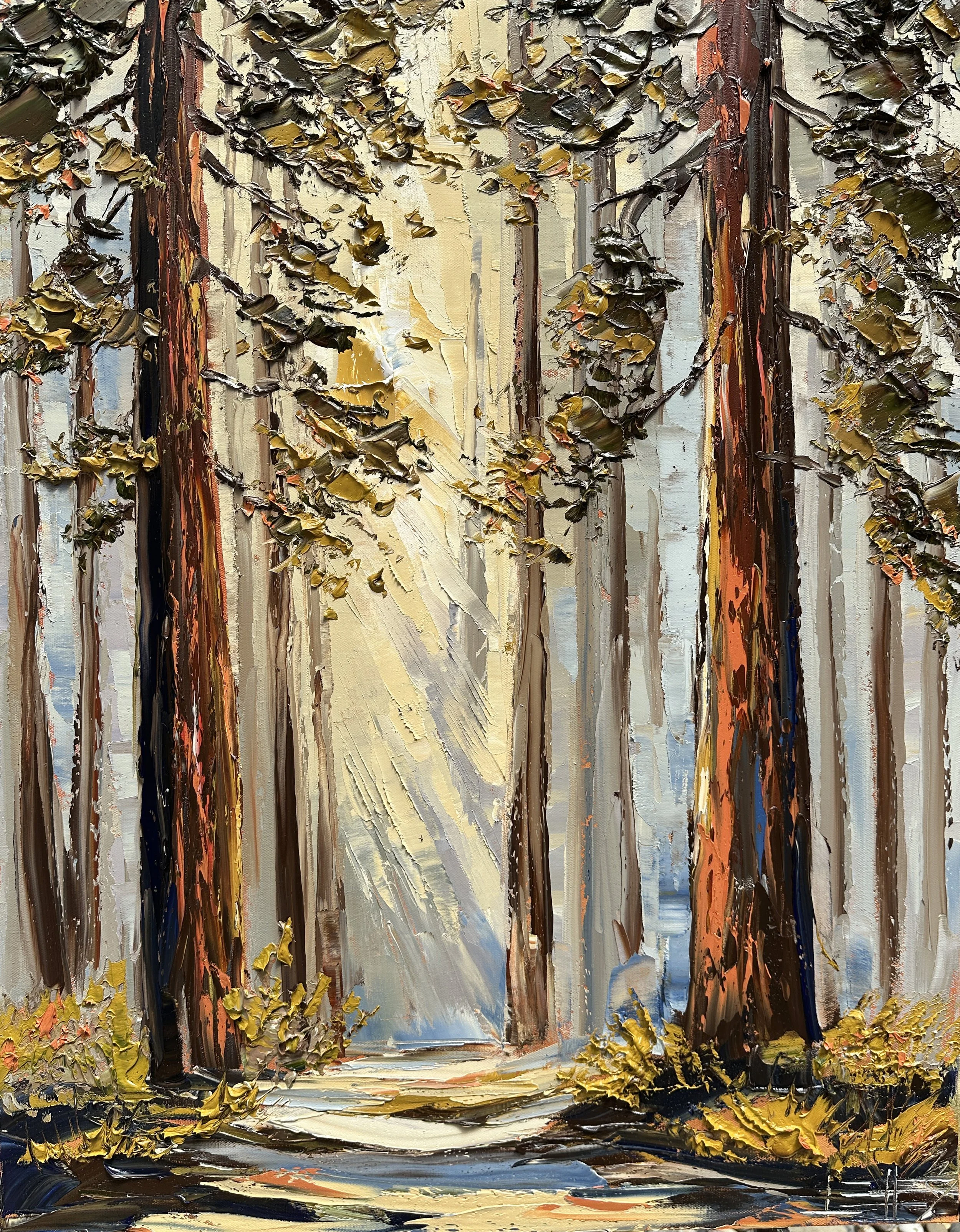
There is something timeless about California coastal art. Whether it's the rugged cliffs of Big Sur, peaceful harbors along Monterey Bay, or fields of wildflowers overlooking the Pacific, coastal landscapes have a remarkable ability to bring a sense of calm into a home.
Unlike trends that come and go, coastal artwork celebrates places that continue to inspire generation after generation.
Choose Art That Creates a Feeling
Many people begin by asking what colors will match their room.
A better question is: How do you want your home to feel?
A painting should do more than fill a wall. It should invite you into a moment—a peaceful morning at the marina, the warmth of golden light on the water, or the quiet beauty of wildflowers along the coast.
When you choose artwork that creates an emotional connection, it becomes something you'll enjoy for decades.
Consider Scale
One of the biggest mistakes collectors make is choosing artwork that's too small.
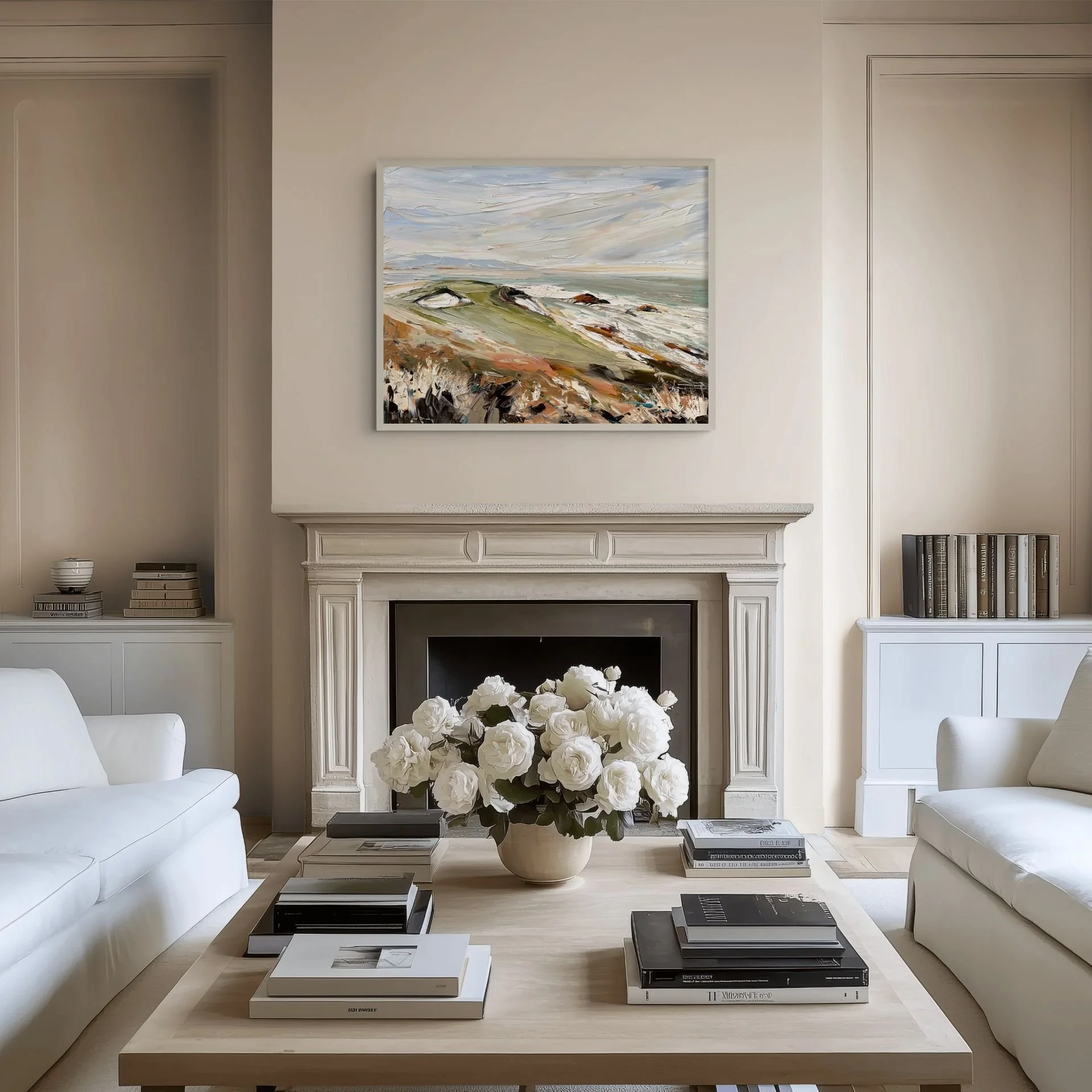
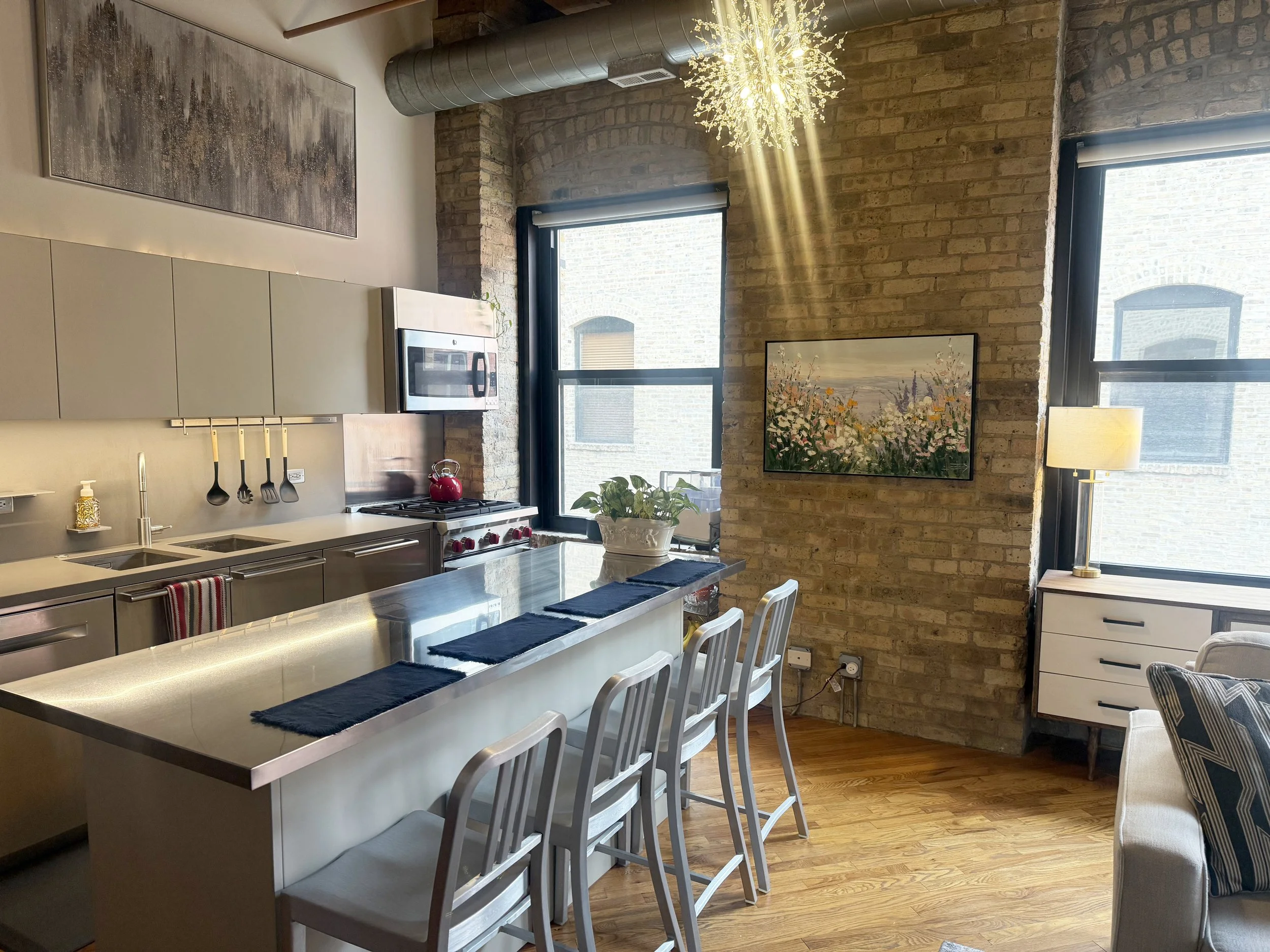
Larger paintings create presence and allow the landscape to breathe. A statement piece over a sofa, fireplace, or dining table often has far more impact than several smaller pieces competing for attention.
Texture Matters
Original paintings offer something that reproductions simply can't replicate.
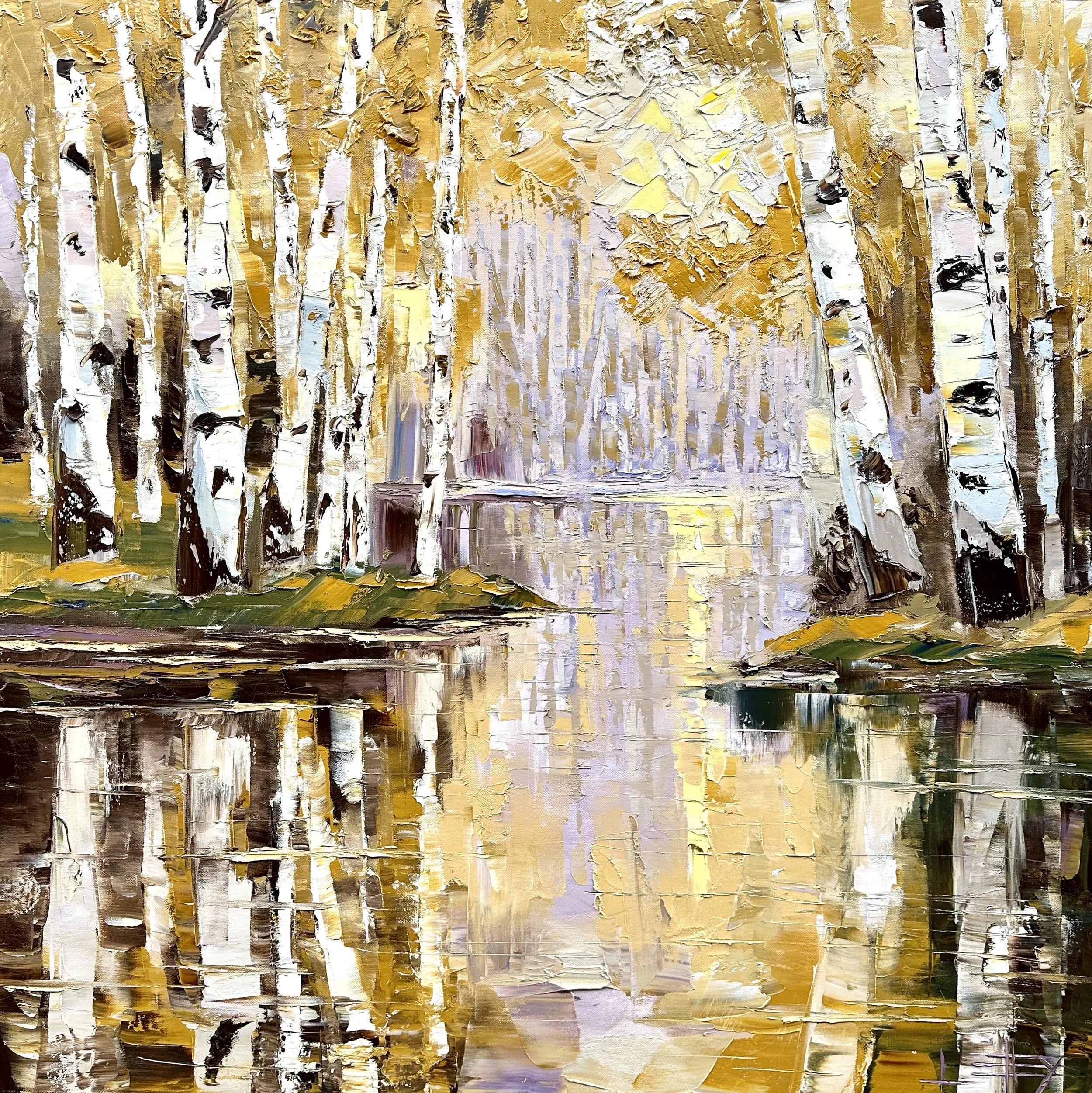
Palette knife paintings create sculptural texture that changes throughout the day as natural light moves across the surface. Every angle reveals new details, making the artwork feel alive within the space.
Invest in What You Love
Artwork isn't only an investment in a home—it's an investment in your daily experience.
The best collections aren't built around trends. They're built around pieces that continue to bring joy every time you walk into the room.
If a painting makes you pause today, chances are it will continue to do so for years to come.
How to Choose Original Art for a Living Room
Original artwork has the power to completely transform a living room. More than simply filling a blank wall, it creates atmosphere, reflects your personality, and often becomes the focal point of the entire space.
Whether you’re purchasing your very first original painting or adding to an established collection, choosing the right artwork is about finding a piece that makes you feel something every time you walk into the room.
Start with the Feeling You Want to Create
Before thinking about colors or sizes, ask yourself one simple question:
How do I want this room to feel?
Do you want your living room to feel:
Calm and peaceful?
Bright and uplifting?
Sophisticated and elegant?
Warm and inviting?
The artwork you choose sets the emotional tone for the space.
As a California coastal artist, I’m continually inspired by the ocean, wildflowers, sailboats, and changing coastal light because these landscapes naturally evoke a sense of calm, openness, and connection to nature.
Browse my collection of California coastal paintings here:
Choose the Right Size
One of the biggest mistakes people make is choosing artwork that’s too small.
A large statement painting can anchor an entire room, especially above:
a sofa
fireplace
console table
dining sideboard
As a general guide:
Small pieces (10–16”) work beautifully on shelves or in gallery walls.
Medium works (24–36”) suit most living rooms.
Large statement paintings (40”+) create dramatic focal points and often become the centerpiece of a space.
If you’re unsure, it’s always better to go slightly larger than you think.
Let the Artwork Lead the Color Palette
Many people believe artwork has to match their décor perfectly.
I actually recommend the opposite.
Choose a painting you genuinely love first, then let it inspire small accents throughout the room…perhaps a cushion, vase, throw, or rug that echoes one or two colors from the artwork.
This creates a home that feels curated rather than coordinated.
Buy What You Love
Trends come and go.
The best original paintings are the ones that continue to make you pause years later.
When you connect emotionally with a piece, you’ll notice new details every day, such as; changing light, texture, brushwork, and subtle color shifts that simply don’t exist in mass-produced prints.
That’s one of the joys of living with original art.
Texture Changes Everything
One of the things collectors often comment on is how different an original painting feels in person.
My paintings are created entirely with a palette knife, building rich layers of oil paint that catch natural light throughout the day. As the light changes, the painting changes with it, creating depth and movement that photographs can only hint at.
If you’d like to learn more about this process, read:
Why Palette Knife Paintings Feel Different
Think Long-Term
Original art isn’t just decoration.
It becomes part of your family’s story.
Years from now, you’ll remember where you found it, why it spoke to you, and the home it has lived in.
That’s something a mass-produced print simply can’t offer.
Explore the Collection
If you’re looking for an original painting inspired by the California coast, you’ll find a curated collection of coastal landscapes, sailboats, and vibrant poppy paintings on my website.
You may also enjoy:
Waterfront Collection – A joyful celebration of spring along the California coastline.
Sea, Sand & Sky Collection – Original palette knife paintings inspired by California’s breathtaking coastline.
Looking for the Perfect Piece?
Whether you’re searching for a statement painting above the sofa or a smaller original to brighten a favorite corner, I’d love to help you find the right artwork for your home.
Browse my available original paintings, or join my email list to receive first access to new releases, studio updates, and collector previews.
→ View Available Original Paintings
→ Join the Collector Email List
Summer on San Francisco Bay
Last week, I made a special trip to San Francisco to hand-deliver one of my paintings, Morning at the Marina, to a lovely collector in the Marina District. One of the unexpected joys of being an artist is occasionally seeing where a painting will live and imagining the quiet moments it may become part of in its new home.
Before heading back down the coast, I decided to linger a little longer in the city and made my way to the St. Francis Yacht Club overlooking Crissy Field and the Golden Gate Bridge.
It was one of those quintessential San Francisco afternoons.
A soft blue haze settled over the bridge and the Marin Headlands, gently blurring the horizon. Sailboats moved quietly across the bay, their white sails catching the changing light as they passed beneath the iconic orange span. The water shifted from deep blue to silver with each passing cloud, and there was a sense of movement and possibility everywhere you looked.
I could have sat there for hours.
I’ve always been drawn to the activity on San Francisco Bay. There is something endlessly captivating about the choreography of the sailboats, the changing weather, and the way the city and nature coexist so beautifully in one place. No two visits are ever the same. The light changes by the minute, and every shift creates an entirely new mood.
These moments continue to inspire my ongoing sailboat collection and many of my coastal paintings. While I often return home with photographs, what stays with me most is the feeling of being there—the cool air off the water, the soft haze in the distance, and the quiet elegance of watching sailboats glide across one of the world’s most beautiful bays.
It is these fleeting moments of atmosphere, movement, and light that continually draw me back to the California coast and, ultimately, back to the easel.
Why Coastal Art Feels Timeless in Modern Homes
There is something about the coast that never goes out of style.
Long before “coastal” became an interior design trend, people were drawn to the sea for its sense of openness, calm, and possibility. Whether it’s a misty harbor at dawn, the rhythmic movement of waves, or sunlight dancing across reflective water, coastal scenes have a unique ability to make us exhale.
As an artist living and working along California’s Central Coast, I’ve seen firsthand how original California Coastal Oil Paintings can completely transform a space—not simply by decorating it, but by changing the way a room feels.
The Coast Gives Us Room to Breathe
One reason coastal art remains timeless is that it naturally creates a sense of spaciousness.
Open horizons, expansive skies, and reflective water invite the eye to travel outward. Even in smaller rooms, coastal paintings can create a feeling of depth and visual breathing room.
This is why so many collectors choose coastal artwork for:
Living rooms
Bedrooms
Entryways
Vacation homes
Coastal-inspired interiors
Spaces designed for relaxation and connection
A large seascape or waterfront painting often brings a sense of quiet that busy, highly detailed artwork cannot.
If you’re looking for statement artwork, explore my collection of large original coastal paintings inspired by Monterey Bay and California’s rugged coastline.
Water Has a Naturally Calming Effect
There is a reason so many people feel their nervous systems settle near the ocean.
Water has an inherently restorative quality. Reflections, gentle movement, and soft atmospheric light all contribute to feelings of peace and calm.
In my own work, I am continually drawn to reflective water paintings because they possess a unique stillness. Reflections slow us down. They encourage us to pause and observe.
Many collectors tell me that the paintings they return to most often are the ones that make them feel something—not excitement or stimulation, but peace.
Coastal art often does exactly that.
Coastal Paintings Work With Many Design Styles
One of the reasons coastal artwork has remained popular for generations is its versatility.
Original coastal oil paintings can complement:
Contemporary interiors
Modern organic spaces
Traditional homes
California casual design
Transitional interiors
Luxury waterfront homes
Soft blues, mineral tones, sandy neutrals, and atmospheric grays pair beautifully with a wide variety of materials, including wood, linen, stone, and natural textures.
Rather than competing with a room, coastal paintings often help unify it.
If you’re unsure what size artwork works best for your room, visit my Collector Resources and learn how to choose the right size artwork for your home.
Coastal Art Connects Us to Place
For many collectors, coastal paintings evoke memories.
Perhaps it’s a favorite beach, a family vacation, a morning spent by the water, or simply a longing for open spaces and slower rhythms.
I paint many scenes inspired by Monterey Bay, Moss Landing, Carmel, and Big Sur because these places possess an extraordinary sense of atmosphere.
The changing light, reflective harbors, rugged coastline, and working waterfronts all tell stories.
No two days ever look the same.
That sense of place is what makes original art so meaningful. It allows us to bring not just an image into our homes, but an experience.
Large Coastal Paintings Create Lasting Focal Points
One of my favorite things about creating large-scale coastal paintings is seeing how they transform a room.
A statement piece above a sofa, fireplace, or dining table can anchor an entire interior.
Large original paintings often become conversation pieces, but they also become emotional touchstones—artwork that people live with, grow attached to, and continue discovering over time.
This is especially true of highly textured oil paintings. As light changes throughout the day, the painting changes with it.
The artwork becomes a living part of the home.
If you’re considering a statement piece, read my guide on how to choose the right size painting for your home and browse my collection of large-scale coastal paintings.
Why I Continue to Paint the Coast
After years of painting California’s coast, I still find myself returning to the same themes:
Light.
Water.
Atmosphere.
Reflections.
The coast teaches us that beauty can be both powerful and quiet.
Perhaps that is why coastal art has endured for generations and why it continues to resonate in modern homes today. It reminds us to slow down, look outward, and reconnect with something larger than ourselves.
For me, every painting is ultimately an invitation—to pause, breathe, and experience a small piece of California’s coast, wherever you happen to live.
The coast continually inspires my collections of working waterfront paintings, sea-and-sky paintings, and luminous reflections.
To learn more about my process and the places that inspire my work, visit About the Artist and discover why I paint the California coast.
Explore More
• California Coastal Oil Paintings
• Working Waterfront Collection
Painting California’s Harbors, Sailboats, and Waterfronts
There are certain subjects I return to again and again.
Not because I’m searching for something new, but because they continue to reveal something different each time I paint them.
For me, those places are found along the California coast.
From Monterey Bay and Moss Landing to quiet harbors, working waterfronts, sailboats, fishing boats, and the ever-changing light that moves across the Pacific, these landscapes have become a constant source of inspiration for my work.
As a California coastal artist, I create original palette knife oil paintings that explore atmosphere, reflection, texture, and a sense of place. While the subject matter may vary—from sailboats gliding across still water to weathered fishing vessels resting in a harbor—the thread connecting the work is always light.
I am especially fascinated by reflections.
Water transforms ordinary scenes into something unexpected. A sailboat becomes a pattern of color and movement. Harbor lights stretch across the surface. Working boats, marina structures, and coastal landscapes dissolve into abstract shapes before resolving themselves again.
Many of my recent paintings have been inspired by what I think of as “Life on the Water”—the rhythm of coastal communities, the movement of boats, the beauty of working harbors, and the relationship between land and sea.
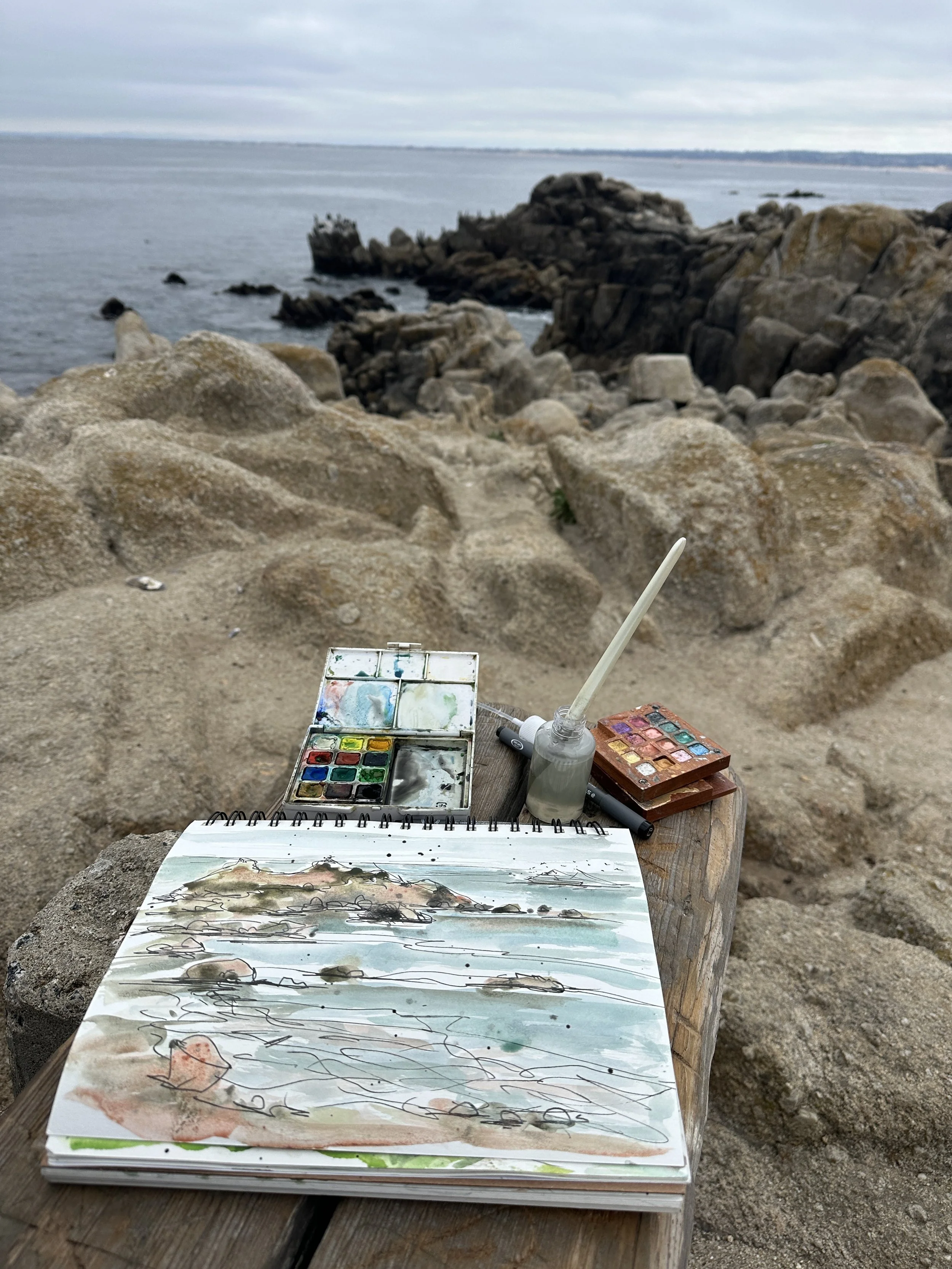
Living and painting in the Monterey Bay area gives me endless opportunities to observe these moments. Early morning visits to marinas, drives along the coast, plein air sketches, and time spent watching changing weather all find their way back into the studio.
My paintings are built slowly through layers of oil paint applied with a palette knife. Thick texture, visible mark-making, and a physical surface are central to the finished work. I want each painting to feel less like a photograph and more like a memory of a place.
Whether I’m painting a sailboat crossing San Francisco Bay, a fishing vessel in Moss Landing, a harbor reflection at sunrise, or a coastal landscape overlooking the Pacific, my goal remains the same: to capture the feeling of being there.
These subjects continue to inspire me because they combine everything I love about painting—light, movement, atmosphere, texture, and the enduring beauty of California’s coastline.
They remind me why I paint in the first place.
Why Positive Thinking Doesn’t Work (And What Actually Does)
For years, I thought there was something wrong with me.
I had read the books.
Listened to the podcasts.
Filled journals with affirmations.
I knew the teachings. I understood them intellectually. I could explain them to other people.
And yet there were moments when my body was telling an entirely different story.
My mind would say:
“Everything is okay.”
While my nervous system was preparing for disaster.
My mind would say:
“Trust the process.”
While my body was scanning for exits.
My mind would say:
“You are abundant.”
While my body was bracing for loss.
Eventually, I realized something that changed everything:
The teaching wasn’t wrong.
The body was missing from the conversation.
The Missing Piece in Personal Growth
Many of us approach personal growth as if we’re machines.
We believe that if we can simply install a new belief, everything will change.
Think positively.
Visualize.
Repeat affirmations.
Focus on abundance.
Trust the Universe.
And while these tools can be helpful, they often leave out one crucial reality:
The body gets a vote.
And for many of us, the body votes first.
You cannot think your way into safety.
You cannot affirm your way out of a nervous system state.
You cannot force your body to believe something simply because your mind understands it.
Why Positive Thinking Feels Exhausting
If you’ve ever felt frustrated by affirmations or mindset work, you’re not alone.
The problem isn’t that the thought is wrong.
The problem is that your body may not yet feel safe enough to receive it.
Imagine trying to convince a frightened horse that there is no danger.
You can explain it logically.
You can present evidence.
You can make a compelling argument.
But until the horse feels safe, it will continue behaving as if danger is present.
Human beings aren’t very different.
When the body doesn’t feel safe, it becomes difficult to sustain thoughts that require safety.
Information Is Not Transformation
Most people today are not suffering from a lack of information.
We’re drowning in information.
We know what we should do.
We know what we should think.
We know what the experts recommend.
But there is often a gap between understanding and embodiment.
A gap between insight and integration.
A gap between what the mind knows and what the body believes.
And that is where so many people get stuck.
What If the Goal Isn’t Better Thinking?
What if the question isn’t:
“How do I think better?”
What if the question is:
“What does my body need in order to feel safe enough to believe this?”
That changes everything.
Because now we’re no longer trying to overpower ourselves.
We’re trying to understand ourselves.
We’re no longer fighting our nervous system.
We’re learning how to work with it.
Your Body Is Not the Enemy
This may be the most important thing I can tell you.
Your body is not sabotaging you.
Your body is not broken.
Your body is not working against you.
Your body is trying to protect you.
Even when its methods are outdated.
Even when its fears are no longer relevant.
Even when its alarms are unnecessary.
The body is doing what it learned to do.
And when we understand that, something softens.
We stop treating ourselves like a problem to be solved.
We stop trying to force transformation.
We begin partnering with ourselves instead.
The Real Goal
Transformation is not about forcing yourself into a new life.
Transformation is about becoming safe enough to receive the life that’s already trying to emerge.
Because when your mind and body finally begin telling the same story, something extraordinary happens.
Life stops feeling like a constant uphill battle.
You stop trying to convince yourself.
You stop performing positivity.
You stop pretending.
And you begin living from a place that feels grounded, steady, and true.
And from that place, positive thinking doesn’t disappear.
It finally has somewhere to land.
Not in your journal.
Not in your vision board.
Not in your imagination.
In you.
Continue the Conversation
If this resonated with you, you’re not alone.
For years, I believed growth was about learning more, thinking better, finding the right strategy, or discovering the missing piece that would finally change everything.
What I’ve come to understand is that real transformation often happens much more quietly.
It happens when insight becomes lived experience.
When understanding becomes embodiment.
When something you’ve known intellectually finally settles into your nervous system and begins changing how you move through the world.
This article is part of my Embodiment Series — a collection of reflections exploring the space between what we know and how we actually live.
Explore the Series
Episode 1: Why Positive Thinking Doesn’t Work
Episode 2: The Difference Between Learning and Living
Episode 3: How Safety Creates Alignment
Episode 4: Why Manifestation Feels Hard When Your Nervous System Is Scared
Episode 5: How Do You Know You’ve Changed?
You can also listen to the companion podcast episodes wherever you enjoy podcasts below:
https://pod.link/1833682316
Stay Connected
If you’d like to receive future reflections, podcast episodes, studio updates, and occasional notes from behind the easel, join my email list below.
And if something in this article landed for you, I’d love to hear from you.
Leave a comment, reply to an email, or send me a message on Instagram.
Some of my favorite conversations begin there.
Until next time, be gentle with yourself.
Growth is rarely as dramatic as we expect.
But it is often more beautiful.
— Lisa Elley
The Phase Where Nothing Looks Like It's Working
There’s a phase of growth that doesn’t look like growth.
It doesn’t feel expansive, or clear. And it definitely doesn’t feel like momentum.
If anything, it feels like things have gone… quiet.
I’ve been moving through that phase recently. Not in a dramatic way. Nothing has “fallen apart.” But the way I used to work, decide, and move through my days has shifted.
Things that once felt automatic now feel unnecessary. Things that once drove momentum don’t seem to apply in the same way. And for a moment, it’s easy to misread that. To think something is off. But I’ve started to see it differently. Not as a loss of direction, but as a reorganization of it.
I noticed this most clearly while painting. There was a point not long ago where I would have kept going, with adding more, refining further, making sure the piece felt complete in a very visible way. But lately, there’s been a different kind of clarity. A moment where I can feel, quite precisely, that the painting is already resolved. And the only thing left to remove…is the impulse to keep proving it.
That shift has changed more than just the work. It’s changed how I approach everything.
There’s a quieter phase that comes after that kind of shift. Where nothing feels urgent. Where the work is clear, but the external response hasn’t fully caught up yet. Where it would be very easy to add something new, just to feel movement again.
But I’ve found that this is the phase that matters most. Because what actually moves things forward now isn’t more effort, it’s precision. Doing what’s already working. Leaving out what isn’t necessary. And staying with that long enough for it to hold.
That’s showing up in my paintings, as more restrained palettes, simpler compositions, fewer, more intentional elements. Not because I’m trying to do less, but because I can feel what doesn’t need to be there. And interestingly, that’s where things start to move again. Not in spikes. Not dramatically, but steadily. In a way that feels sustainable.
I recently recorded a short series of podcast episodes around this idea, about what happens before things open, why the quiet phase is often misunderstood, and what actually creates movement once you stop forcing it. But really, it all comes back to the same thing:
The next level of anything isn’t built by adding more, It’s built by recognizing what’s already working, and having the restraint to leave it alone.
That’s the phase I’m in right now. And it’s changing everything, not loudly, but in a way that actually holds.
Listen to the Coherence Channel Podcast here: https://pod.link/1833682316
Fine Art Canvas Prints: My Long-Term Partnership with iCanvas
Over the years, I’ve partnered with iCanvas to offer fine art canvas prints of my original oil paintings.
As a palette knife artist known for heavy texture and layered color, translating my work into print is something I take seriously. Not all canvas prints capture the depth, movement, and tonal balance of an original painting.
That’s why this partnership has always come down to one thing:
quality reproduction.
Translating Original Paintings into Canvas Prints
My work is created with thick oil paint, applied using a palette knife. The texture is part of the experience, something collectors often respond to immediately.
When creating art prints from original paintings, the goal is not just to replicate the image, but to preserve:
color accuracy
depth and contrast
the overall feeling of the piece
iCanvas specializes in producing high-quality canvas prints that stay true to the original artwork. Over time, I’ve seen a consistency in how my work is translated, which is essential when offering prints to collectors.
Why Canvas Prints Matter for Collectors
While original paintings remain the heart of my work, fine art prints offer a more accessible way to collect.
For many people, canvas wall art allows them to:
bring original artwork into their home at a different price point
build a collection over time
explore an artist’s work before investing in an original
High-quality giclée canvas prints, like those produced by iCanvas, ensure that the integrity of the artwork is maintained.
A Trusted Art Licensing Partnership
Working with an established platform like iCanvas has allowed my work to reach a broader audience through licensed art prints.
As my business has evolved, I’ve become more intentional about where I focus my time and energy. What has remained important is partnering with companies that:
value the artist’s work
prioritize print quality
present the artwork professionally
That alignment is what makes a long-term collaboration sustainable.
Balancing Originals and Prints
My primary focus will always be creating original paintings in the studio.
Canvas prints are not a replacement, they are an extension.
They allow the work to exist in more spaces, while the originals continue to hold their unique presence and texture.
When done well, fine art reproduction supports both the artist and the collector.
Final Thoughts on Fine Art Prints
Offering canvas prints of original artwork is a way to make art more widely available without compromising quality.
It’s always rewarding to see a piece take on a new life beyond the studio, especially when it’s reproduced with care.
If you’re exploring fine art prints or canvas wall art, quality matters. The right print should feel as close as possible to the original, both visually and emotionally.
You can view my icanvas profile here:
Introducing Sea, Sand & Sky
Over the past few weeks in the studio, something has shifted.
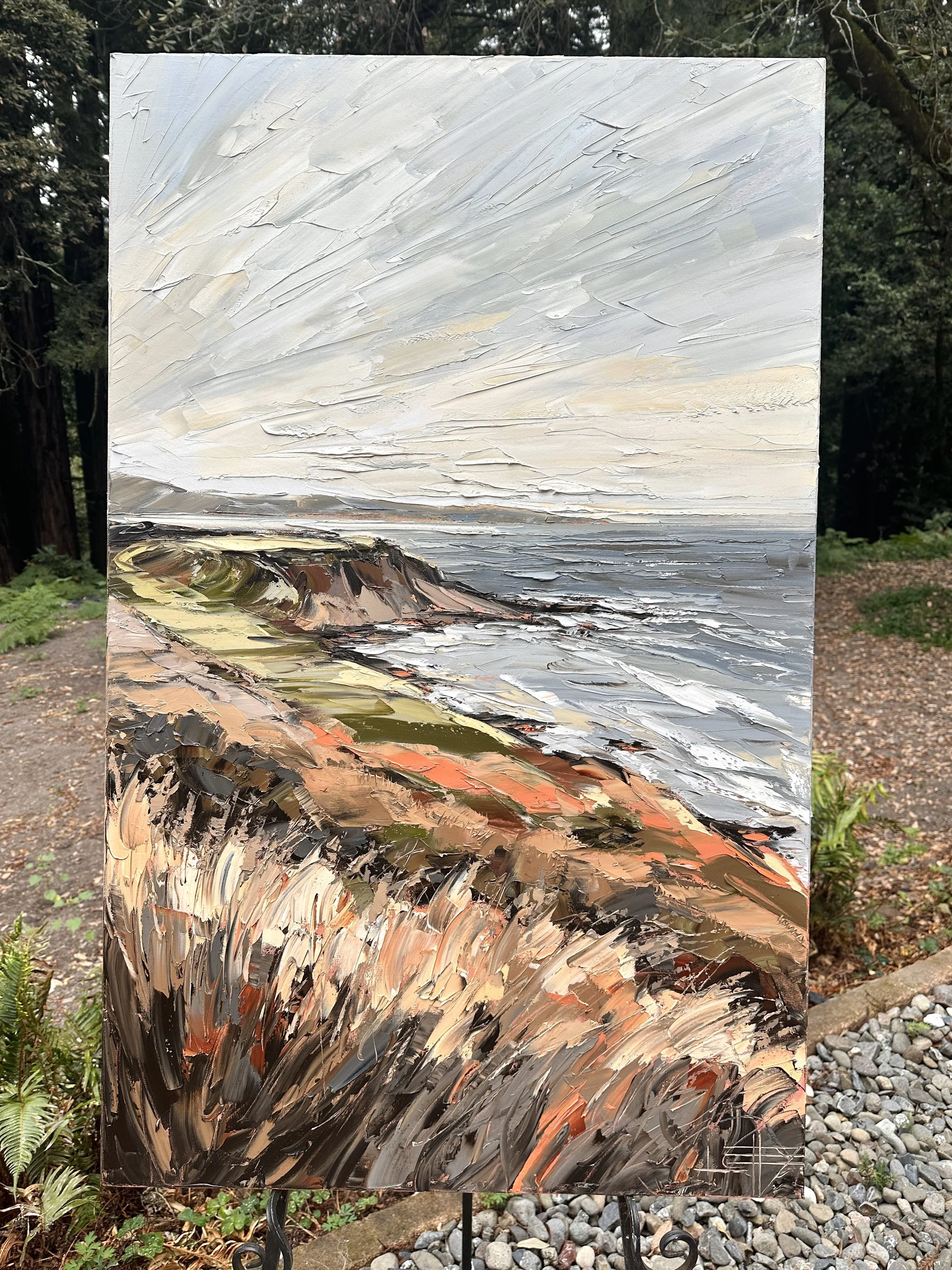
The coastline in my work has widened. The compositions have become more structural. The cliffs feel less rendered and more architectural, built in planes rather than described in detail. Light is carrying more of the composition. Color is still present, but it’s restrained, held within stronger forms.
This new body of work, Sea, Sand & Sky, marks a quiet expansion in my practice.
It isn’t a dramatic pivot. It’s a refinement.
For years, florals and saturated foregrounds were central to my coastal landscapes. They brought joy, movement, and brightness to the edge of the sea. In this series, I’m allowing more air into the paintings. The horizon breathes. The cliffs hold their own weight. The surface shows its joins.
There’s something honest about that.
The palette knife has become more blocky, more decisive. Edges are visible. Layers are built, scraped back, rebuilt again. The work is not seamless, and I don’t want it to be. There’s strength in allowing structure to show.
This series explores:
Architecture within nature
Light as structure rather than decoration
Expansion through restraint
Forward motion without frenzy
One recent painting includes softened California poppies in the foreground, likely the only floral in this new direction. It feels like a bridge between what has been and what’s unfolding.
I’ve shared a long-form studio video of that piece, paired with a reflective voice recording about this transition. You can watch it here:
The full Sea, Sand & Sky collection will be released later this spring.
Thank you for following along as the work evolves.
Lisa
My New Spring Floral Collection
These are a few recent paintings from the studio as I begin working into my spring florals.
I’ve been slowing things down and spending more time with each piece, paying attention to palette, surface, and how the paint is actually behaving. Rather than pushing toward finished statements, I’m letting the work unfold more gradually and seeing what happens when I give it a little more space.
I’m also refining the palette in a quieter way. Fewer colors, more subtle shifts, and a focus on how texture and movement can carry the painting without needing much else. It feels thoughtful and unhurried, and that feels right for where the work is headed.
I’ll continue adding to this as the collection develops.
Books for the Season After Striving
What I’m recommending now, and why
Over the past year, I’ve noticed something shift in what I’m drawn to read and listen to.
I’m no longer looking for books that promise transformation, breakthroughs, or a better version of myself waiting somewhere in the future. I’ve read those. I’ve lived those. And while they had their place, they’re not what I need now.
What I’m drawn to instead are books that support presence, emotional maturity, and life as it’s actually lived, relationships, creativity, uncertainty, and the quiet work of being human without constant self-improvement.
I was recently asked for Audible recommendations around mindfulness and relationships, and it made me realize I’ve quietly built a small internal list of books that feel deeply aligned with this phase.
Here are a few I genuinely recommend, not as prescriptions, but as companions.
Grounded Presence & Nervous System Regulation
These are books I return to when I want to feel settled, not motivated.
Radical Acceptance by Tara Brach
A compassionate, steady exploration of what it means to stop fighting ourselves. This book is deeply regulating, less about insight and more about kindness toward what’s already here.
When Things Fall Apart by Pema Chödrön
A classic for a reason. Honest, practical, and comforting when life feels uncertain. Not about fixing anything, more about staying present when we don’t have answers.
Being Peace by Thich Nhat Hanh
Simple, embodied mindfulness. Beautiful to listen to on walks or quiet mornings. Nothing flashy, just reminders of how to inhabit the moment gently.
Relationships Without Fantasy or Collapse
These books approach love and connection with sobriety, responsibility, and care, not drama.
The Road Less Traveled by M. Scott Peck
Old-school and surprisingly relevant. Explores love as discipline, honesty, and growth, not chemistry alone.
All About Love by bell hooks
A clear-eyed look at love as an active practice of care, respect, and responsibility. Grounded, thoughtful, and deeply human.
Attached by Amir Levine & Rachel Heller
Practical and clarifying. Helpful for understanding relational patterns without self-blame or over-analysis.
Creativity, Identity & Self-Trust
For artists, founders, and anyone returning to creativity without pressure.
The Creative Act by Rick Rubin
One of the most aligned books I’ve read recently. About creating from presence rather than performance. Quiet, spacious, and wise.
Big Magic by Elizabeth Gilbert
Encouraging without being pushy. Especially helpful for creatives recovering from burnout or perfectionism.
The War of Art by Steven Pressfield
Short, direct, and clarifying. Less spiritual, more practical, useful for cutting through resistance without drama.
Integration After Awakening or Healing
These are for the phase after the big insights.
After the Ecstasy, the Laundry by Jack Kornfield
This one fits this season exactly. About living well after insight, relationships, work, family, and ordinary life.
A New Earth by Eckhart Tolle
Less about transcendence, more about loosening identity and living with presence in daily moments.
When Nothing Is Wrong Anymore
There’s a moment almost no one talks about.
It comes after the work.
After the processing.
After the hard conversations.
After the changes you didn’t know how you’d survive, but did.
It’s the moment when, quietly and without announcement,
nothing is wrong anymore.
And instead of relief, what often shows up first is confusion.
Because when you’ve spent a long time fixing, healing, rebuilding, or reorienting your life, problem-solving becomes more than a habit. It becomes a form of orientation. It gives your days shape. It gives your nervous system something to organize around.
So when the problems genuinely quiet down, not because everything is perfect, but because your system no longer needs to scan, the question that can arise is simple and unsettling:
Wait… what now?
You might notice that:
days feel flatter
motivation is quieter
the inner narration softens or disappears
nothing feels particularly urgent or dramatic
And if you’re not expecting this, it can feel like something has gone missing.
But nothing has gone missing.
You’ve entered stability.
And stability doesn’t announce itself.
It doesn’t sparkle.
It doesn’t demand attention.
It feels… ordinary.
For many people, this is the moment they go looking for the next thing to fix. They assume calm means stagnation. They scan for misalignment. They stir the waters just to feel movement again.
But calm isn’t stagnation.
Calm is capacity.
When nothing is wrong anymore, the nervous system finally gets to stand down from constant vigilance. And if intensity has been your baseline for a long time, that stand-down can feel disorienting.
You might catch yourself thinking:
Shouldn’t I feel happier than this?
Shouldn’t I feel more inspired?
Why do I feel so neutral?
Neutral isn’t empty.
Neutral is rested.
It’s the place where:
you don’t need a story to feel safe
you don’t need momentum to feel worthy
you don’t need clarity before taking the next step
Life doesn’t stop here. It simply starts moving differently.
Instead of leaps, it moves in steps.
Instead of breakthroughs, it moves through rhythm.
Instead of insight, it moves through participation.
You engage your finances.
You show up to conversations.
You make plans without certainty.
You take care of things because they’re yours to take care of.
And slowly, quietly, confidence rebuilds, not from outcomes, but from contact.
🎧 If this resonates, I explore this moment more deeply in the podcast episode “When Nothing Is Wrong Anymore.”
It’s a short, grounded reflection for anyone who feels disoriented by calm rather than relieved by it.
Here's the Apple Podcasts Link
One of the most important shifts in this phase is the move from meaning-making to participation.
Meaning asks: What does this say about me?
Participation asks: What needs my attention right now?
Meaning tightens the system.
Participation steadies it.
In this season of life, many people notice that:
creativity feels optional rather than urgent
rest doesn’t need justification
clarity arrives after action, not before
repetition starts to feel safe
This is not regression.
This is where confidence is rebuilt, not through insight, but through rhythm.
Doing the dishes.
Answering the email.
Updating the spreadsheet.
Taking the walk.
Letting a day be unremarkable without trying to redeem it.
No single action carries symbolic weight.
Nothing has to make up for anything else.
If you’ve lived inside transformation for a long time, this phase can feel strangely unheld. But what’s actually happening is that you’re holding yourself, without gripping.
There is no identity you need to step into next.
There is no version of you waiting to emerge.
There is just this one, already capable of living.
And that changes how life feels in the body.
This phase doesn’t respond to urgency.
It responds to consistency.
Life doesn’t need to be summoned here.
It responds to contact.
One ordinary step at a time.
✨ If you’d like a longer, body-led version of this reflection, there’s an extended audio practice inside the Lumera library.
It’s designed for people who are living after the questions, and learning how to trust stability without needing to perform, fix, or optimize it.
You can explore it quietly, at your own pace, whenever living forward feels like the work.
When a Chapter Finishes Quietly
There’s a particular kind of moment that comes after long relationships end.
It’s not the ending itself.
That part is usually clear, sometimes painful, sometimes necessary, often both.
This moment comes later.
It arrives when you realize your ex has moved on.
Not as information.
As sensation.
By the time this happens, you may already be stable.
You may already trust yourself.
You may already know the relationship ended for good reasons.
And still, the body responds.
That doesn’t mean anything is unresolved.
It means something is completing.
When you share decades with someone, your nervous system adapts to shared orientation. Even after separation, some part of the body still remembers how it once organized around “we.”
When that final thread releases, it can feel hollow. Or tender. Or strangely neutral.
This isn’t grief the way we usually talk about grief.
It’s not longing.
It’s not regret.
It’s the body acknowledging that a structure it once relied on no longer exists.
And that moment can be surprisingly emotional, not because you want to go back, but because something real just finished.
There’s often a quiet strength that follows.
A grounded sense of:
I know how to hold myself now.
Not as independence for show.
As embodied security.
This is the part of the journey that doesn’t get celebrated.
There are no milestones.
No announcements.
No clear next step.
Just presence.
And presence is enough.
You don’t need to analyze this phase.
You don’t need to optimize it.
You don’t need to move through it faster.
Let the nervous system complete what the mind already understands.
Completion is gentle.
Completion is quiet.
Completion doesn’t rush.
And when it settles, what remains is not emptiness, but ground.
You’re standing on it now.
If this reflection resonated, I’ve gathered a small private library of long-form audio reflections called Lumera, created for slower integration, nervous-system steadiness, and living through transitions without pressure.
You can explore it quietly, if and when it feels right, at https://windsweptstudio.com/lumera
Twelve Years of Trust: A Reflection on My Journey with UGallery
Longevity is one of the rarest currencies in the art world.
Trends move quickly. Platforms change. Attention shifts.
What lasts, truly lasts, is built on trust, patience, and the willingness to grow together over time.
This week, UGallery published a feature interview about my work, my process, my history, and the way texture and landscape have shaped my artistic language.
You can read the full article here:
👉 https://www.ugallery.com/blogs/artist-interviews/lisa-elley
As I read it, what struck me most wasn’t seeing my own words reflected back, it was realizing how rare a 12-year partnership truly is in the art world.
UGallery and I began working together over a decade ago, long before social media algorithms, constant content cycles, or overnight success stories became the norm. Over the years, my life has changed in real ways, raising children, relocating studios, evolving my work, weathering economic shifts, and continuing to show up to the canvas day after day.
Through all of it, this partnership has remained steady.
That kind of longevity doesn’t come from hype.
It comes from trust.
Trust in the work.
Trust in the artist’s evolution.
Trust that a career can be built slowly, honestly, and with integrity.
The interview touches on many parts of my process, my palette-knife technique, my love of California landscapes, my travels, and the way texture has become my primary language. But what is subtext, is the quiet, unglamorous consistency behind the scenes.
The thousands of hours alone in the studio.
The seasons of refinement.
The willingness to let the work mature alongside the person making it.
That’s what a long partnership holds space for.
I’m deeply grateful to UGallery for continuing to support artists not just at a moment in time, but across the arc of a career. Being featured after twelve years doesn’t feel like a peak, it feels like a marker of continuity.
And continuity, in a creative life, is everything.
If you’d like to browse my exclusively represented portfolio on Ugallery, tap the link below
👉 https://www.ugallery.com/pages/lisa-elley
Lisa
The Moment You Realize It Was Never Apathy, It Was Your Nervous System
There’s a quiet turning point in a person’s inner life, a moment you rarely see coming and often don’t have words for.
It’s the moment you realize that so much of what you once interpreted as distance, disinterest, or emotional apathy…
was not the truth of the situation at all.
It was your nervous system doing what it learned to do.
When you’ve lived years, or decades, in a body that had to anticipate, manage, or soften the emotional landscape around you, your system becomes skilled at reading micro-cues.
It becomes attuned to danger, not connection.
To inconsistencies, not steadiness.
To what went wrong then, instead of what’s actually happening now.
So later in life, when you meet someone grounded and neutral, your system can easily misread that energy as “something is wrong.”
Neutrality can feel like distance.
Slowness can feel like rejection.
Careful pacing can feel like disinterest.
Not because they’re pulling away,
but because your body learned long ago that emotional safety requires effort.
And then one day, usually after a long, slow season of inner regulation,
you notice something:
Your body isn’t bracing anymore.
You’re not scanning.
You’re not filling in gaps.
You’re not interpreting silence as withdrawal.
You’re not projecting old pain onto present people.
Instead, you’re simply… here.
Present.
Soft.
Clear.
And for the first time, you can see the difference between:
Apathy and neutrality.
Avoidance and pacing.
Distance and steadiness.
Nothing outside you has changed.
But the inside of you has.
Your nervous system isn’t preparing for loss anymore.
It’s allowing for connection.
This moment, this internal click, rewrites the entire emotional landscape.
Not through force, but through clarity.
You begin to see others accurately.
You begin to feel relationships without distortion.
You begin to trust the calm inside you.
Because it was never apathy.
It was never indifference.
It was never a missing signal from someone else.
It was your system protecting you
with information that no longer applies.
And once you see it,
you can’t unsee it.
If you want to explore this more deeply, I recorded a podcast episode on this exact turning point. You can listen here → https://open.spotify.com/episode/0tfHECzJIza2pgORPNwjMg?si=lEQOtYq_SCubaIbRVhAFzg
The Moment Your Life Changes Is the Moment You Stop Abandoning Your Truth
There’s a turning point in every career and every life.
Not a dramatic breakthrough or a cinematic epiphany, but a quiet, almost private moment where your body tells the truth long before your mind is willing to admit it.
It’s the moment you stop abandoning yourself.
Most people never realize this, but your clarity, your health, your resilience, and even your confidence don’t expand because you push harder, optimize your habits, or perfect your routines.
They expand at the frequency of your truth.
Because when your inner world and outer world finally match, something remarkable happens:
Your energy returns.
Your focus sharpens.
Your nervous system settles.
Your decisions simplify.
Your path becomes unmistakably yours.
And your body feels the shift instantly.
Because your body always knows.
It knows when you’re people-pleasing your way through meetings.
It knows when you’re saying “yes” while everything inside you says “no.”
It knows when you’re staying in roles, rooms, or relationships you’ve quietly outgrown.
It knows when you’re performing stability instead of living it.
And misalignment, even subtle, polite, socially acceptable misalignment, takes a toll.
Not emotionally.
Biologically.
Cortisol rises.
Breathing shallows.
Energy drains.
Heart-rate variability drops.
Your system shifts into a low-grade state of protection because some part of you recognizes,
“This isn’t honest.”
But here’s the part we’re never taught:
The moment you stop abandoning your truth, even in small, barely perceptible ways, your entire system reorganizes.
Your breath deepens.
Your shoulders drop.
Your thinking clears.
Your decision-making becomes clean and quiet.
Your body moves from defense into coherence, a measurable, biological state of alignment where your thoughts, emotions, and actions finally work in the same direction.
Authenticity isn’t a personality trait.
It’s a physiological advantage.
Coherence isn’t a spiritual concept.
It’s a state your nervous system recognizes as safety.
And truth isn’t a luxury.
It’s home.
When you stop masking…
when you stop explaining yourself into exhaustion…
when you stop shrinking to preserve the comfort of everyone around you…
You create the internal conditions for your intelligence to come back online.
Your creativity increases.
Your confidence stabilizes.
Your communication sharpens.
Your leadership becomes grounded instead of reactive.
Your life, internally and externally, recalibrates around what is real.
Not because everything suddenly becomes effortless,
but because you’re no longer leaking energy toward the performance of who you’re not.
Growth doesn’t ask you to become someone new.
It asks you to stop abandoning who you already are.
So if you’re feeling tired, unclear, disconnected, or strangely “off”…
the question might not be:
“What’s wrong with me?”
The question might be:
“Where am I still betraying my own truth?”
Because the moment you stop…
the moment your inner world and outer actions align…
Your biology shifts.
Your energy returns.
Your confidence rises.
Your path becomes obvious.
Your truth doesn’t just change your life.
It recalibrates your entire field.
Crowned by Coastal Light 36×24”
When the Quiet Ending Finally Lands
There are endings that arrive with noise and rupture…
and then there are the quiet ones.
The endings that unfold slowly, respectfully, almost silently,
so gently that you only realize a chapter has closed
after you’ve already stepped into something new.
My twenty-four–year marriage ended this way.
There was no dramatic exit.
No explosion.
No crisis point.
Just a gradual untethering of two people who had built a life together,
still sharing the same home while navigating logistics, timing,
and the realities of starting over.
It was peaceful.
Practical.
Human.
And for a long time, I didn’t understand why I still felt subtly “held in place,”
even after the emotional and mental clarity had arrived.
It wasn’t until I moved into my new casita studio,
a small space with beautiful natural light
and a quiet outdoor area where I can paint,
that something in me finally shifted.
Not dramatically.
Not euphorically.
Just… cleanly.
A soft internal click I didn’t know I’d been waiting for.
What I’ve learned is this:
The mind can accept an ending long before
the nervous system completes it.
Long-term partnership creates an unconscious choreography,
tiny adjustments in rhythm, energy, and awareness.
Even in peaceful relationships, your nervous system tracks another person’s presence.
You don’t simply “turn that off”
because the marriage contract is ending.
But the moment I set my things down in a space that held only my energy,
no shared routines, no subtle attunements, no overlapping emotional weather,
my body exhaled in a way it hadn’t in years.
And in that stillness, I met a version of myself
I had not heard clearly in a very long time.
Calm.
Clear.
Steady.
Fully present.
What surprised me most was how immediately my creativity responded.
The casita is small, but the light is generous.
The air feels different.
The quiet is spacious.
And the work that is emerging from this studio carries a new frequency,
more refined, more elegant, more honest.
It feels like the beginning of a new era in my art.
A softening of palette.
A gentler tempo.
A sense of clarity I couldn’t access while I was still living in an in-between space.
Quiet endings do that.
They create the conditions for quiet beginnings.
Many of us move through transitions that don’t come with big declarations,
the end of a relationship,
a career pivot,
a shift in identity,
a season of life that no longer fits.
We often wait for something dramatic to “prove” the change is real.
But sometimes the most meaningful transformations arrive quietly,
without burning anything down
or tearing a chapter apart.
Sometimes the shift begins the moment you enter a space
where nothing in you has to brace or accommodate anymore.
A space where your nervous system stops tracking anyone but you.
A space where the future isn’t forced.
A space where you can finally hear yourself again.
I’m in that space now.
Painting in natural light.
Breathing my own rhythm.
Letting the work lead the way.
It feels good.
Simple.
True.
If you’re in a quiet ending of your own, I hope this reminds you:
You don’t need catastrophe to justify change.
You don’t need drama to validate what you feel.
You don’t need permission to step into a chapter that already belongs to you.
Sometimes the beginning arrives
the moment the quiet finally lands.
Why Environment Matters for Creative Work
I’ve been reflecting a lot on the relationship between space and creativity, not as an abstract idea, but as something I’ve lived through deeply over the past few years.
For a long time, my art was made in borrowed corners, shared rooms, temporary setups, and whatever little pockets of space were available in the moment. If you’re a creative of any kind, you probably know that dance: adapting, improvising, doing your best with what you have.
Scrappiness is a skill.
It builds resilience, discipline, and resourcefulness.
But over time, I’ve learned something important:
Your creative work can only expand as far as your environment allows it to.
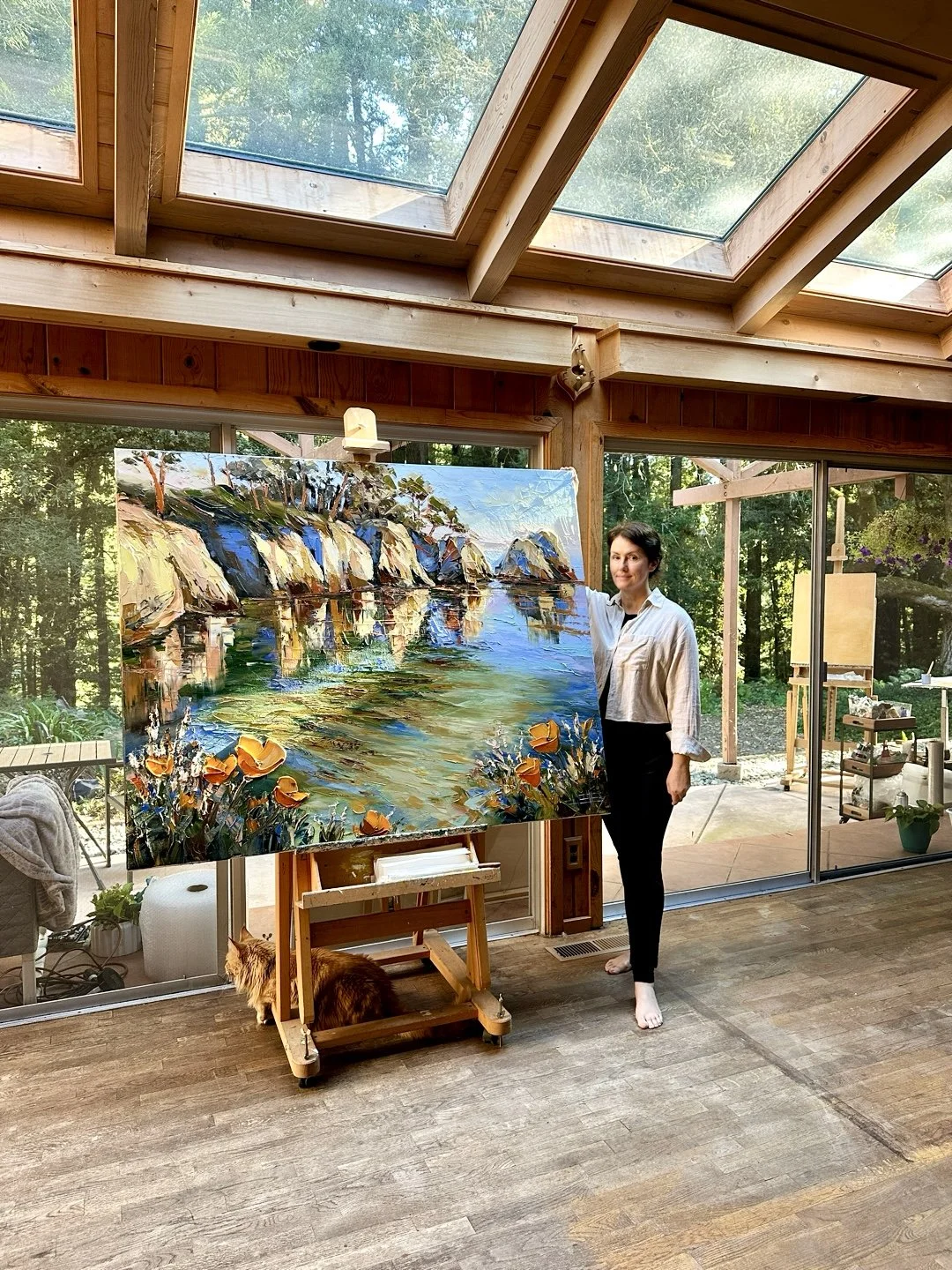
Recently, I moved into a small casita studio, a quiet, bright space that is entirely my own, and almost immediately, everything shifted. Not dramatically, not loudly, but in that subtle, grounded way clarity always arrives:
My nervous system settled.
My focus sharpened.
My ideas felt roomier.
My routines felt easier.
My work felt more intentional.
It reminded me of a truth I had temporarily forgotten:
environment is part of the creative process.
It’s not just the backdrop.
It’s not just where you “happen to be” while you work.
It shapes the quality of your focus, the depth of your thinking, and the energy you bring to your craft.
A supportive environment doesn’t magically do the work for you, but it creates conditions where your best work becomes possible, sustainable, and joyful.
If you’ve been feeling stretched thin or stuck in a creative rut, it might not be your ideas or your motivation. It might simply be that you’ve outgrown the environment you’ve been working in.
Sometimes the most important upgrade isn’t a tool or a technique.
It’s the place you sit down to create.
Here’s to new chapters, new spaces, and the work that can finally breathe because of them.
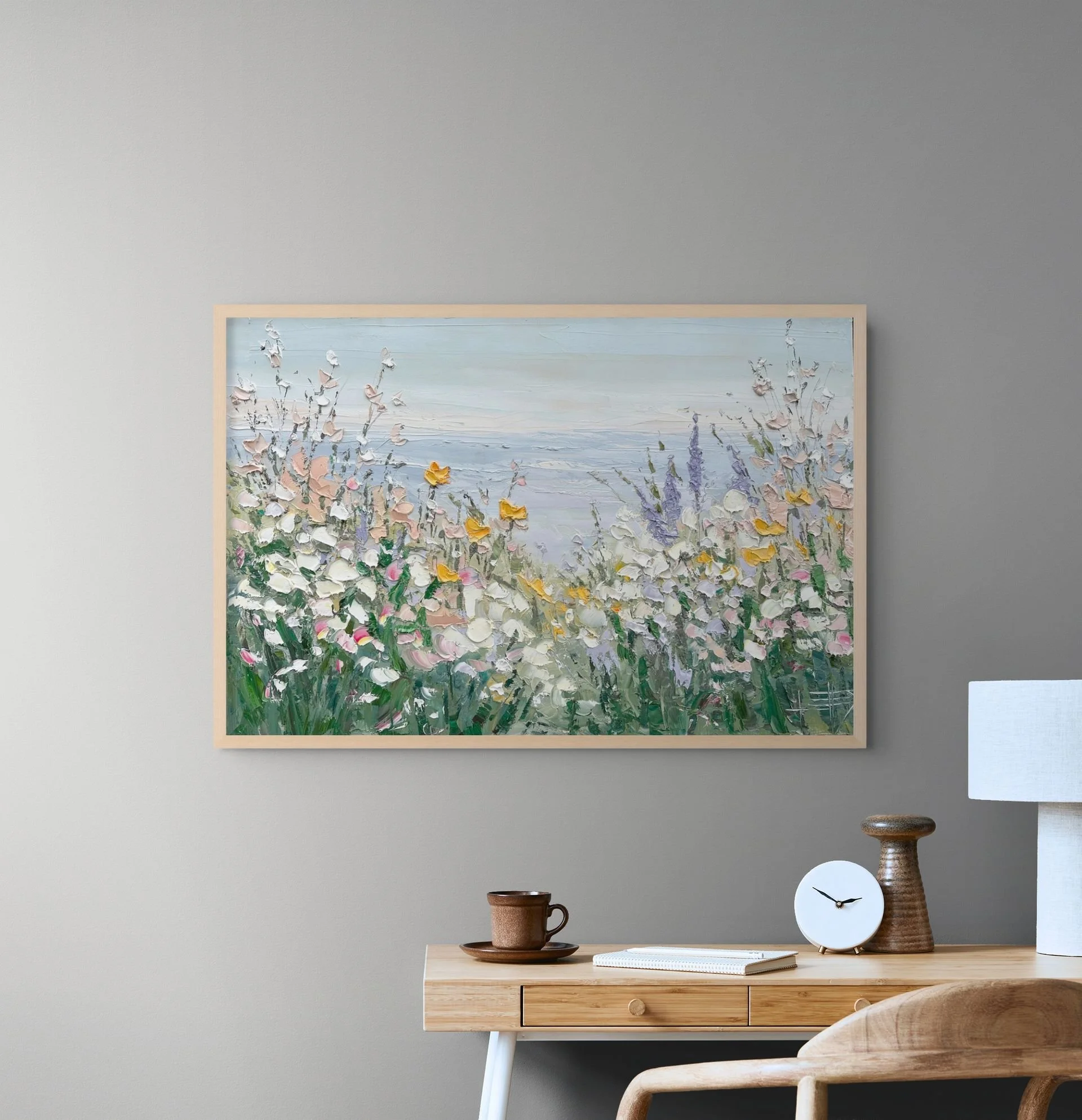
Where the Wildflowers Wait, available exclusively on Ugallery.com
Gratitude Isn’t Soft, It’s Strategy
As we head into Thanksgiving, I’ve been thinking a lot about gratitude, not the big, glowing, Instagram-worthy kind, but the quieter form that has shaped nearly every turning point in my life.
The kind that doesn’t need a spotlight.
The kind that doesn’t announce itself.
The kind that rewires your inner world long before the outer world catches up.
For years, I misunderstood gratitude as another “performance metric”, something to list in a journal, something to recite, something to use as evidence that I was being a good person, a positive thinker, a disciplined creator.
But real gratitude isn’t performative.
It’s directional.
It doesn’t ask you to paste a smile over a hard moment.
It doesn’t require you to deny your feelings.
It doesn’t demand a spiritual bypass or a fake sense of joy.
Instead, real gratitude does something much quieter, and infinitely more powerful:
It stabilizes the system.
It grounds you in what’s real, not what’s missing.
It shifts your field from frantic to coherent.
It helps you see possibility instead of threat.
And it returns you to the version of yourself that makes better decisions, builds bolder things, and trusts the long game.
Gratitude, in its purest form, is clarity.
It brings you back into your body.
It brings you back into your values.
It brings you back into the moment where your life is actually happening, not the one you’re trying to outrun or control.
And when your nervous system comes back online, when the noise settles, and when you’re able to breathe again from your actual center… everything begins to shift.
Your creativity opens.
Your resilience strengthens.
Your next steps become obvious.
And the world stops feeling like something you need to brace against.
This year, my gratitude practice has been less about lists… and more about listening.
Less about saying “thank you”… and more about noticing the moments when I feel anchored, present, and steady.
Less about chasing the peak… and more about honoring the calm.
Gratitude isn’t soft. It’s not fluffy. It’s not something you sprinkle on top of a chaotic life.
Gratitude is strategy.
Because when you stabilize the inner field, the outer world organizes itself around that stability.
When you move from coherence, the path clears faster.
And when you stay connected to what’s here instead of what’s missing, you stop performing and start living.
So as we step into Thanksgiving week, here’s the quiet truth I’m landing in:
Gratitude isn’t something you practice to feel better.
It’s something you embody to become clearer.
And clarity changes everything.