From Turnberry to Pebble Beach: How a Custom Painting Evolves
Some commissions begin with a photograph of a landscape.
This one began with a photograph of an office.
When my collector reached out, he sent me an image of the room where the finished painting would live. From there, we considered the dimensions of the wall, the existing décor and the overall feeling he wanted the artwork to bring into the space.
His original idea was a coastal golf scene inspired by Turnberry, Scotland.
It was a natural fit for my work: a dramatic shoreline, sweeping contours, ocean movement and the kind of atmospheric light that translates beautifully through a palette knife.
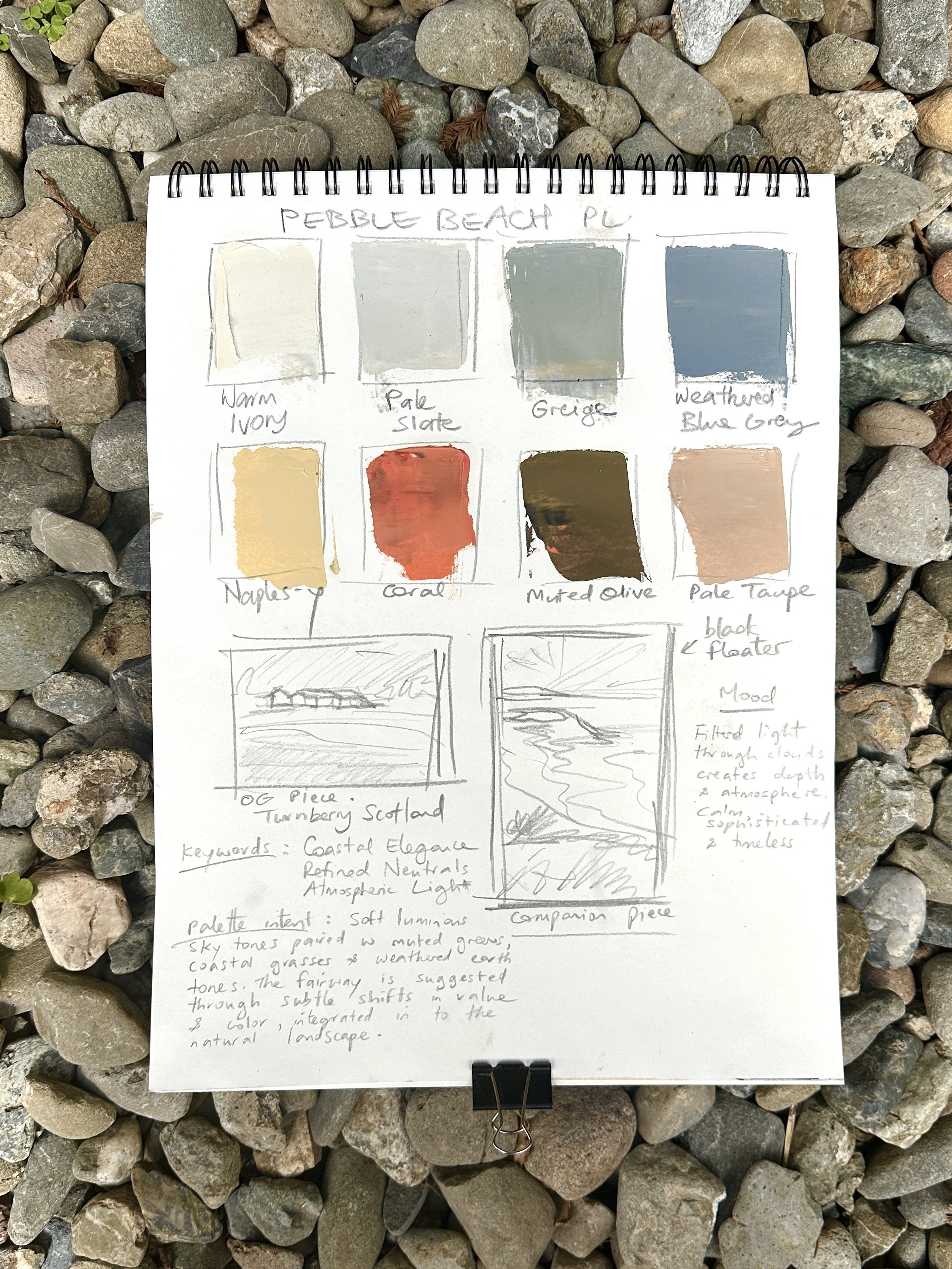
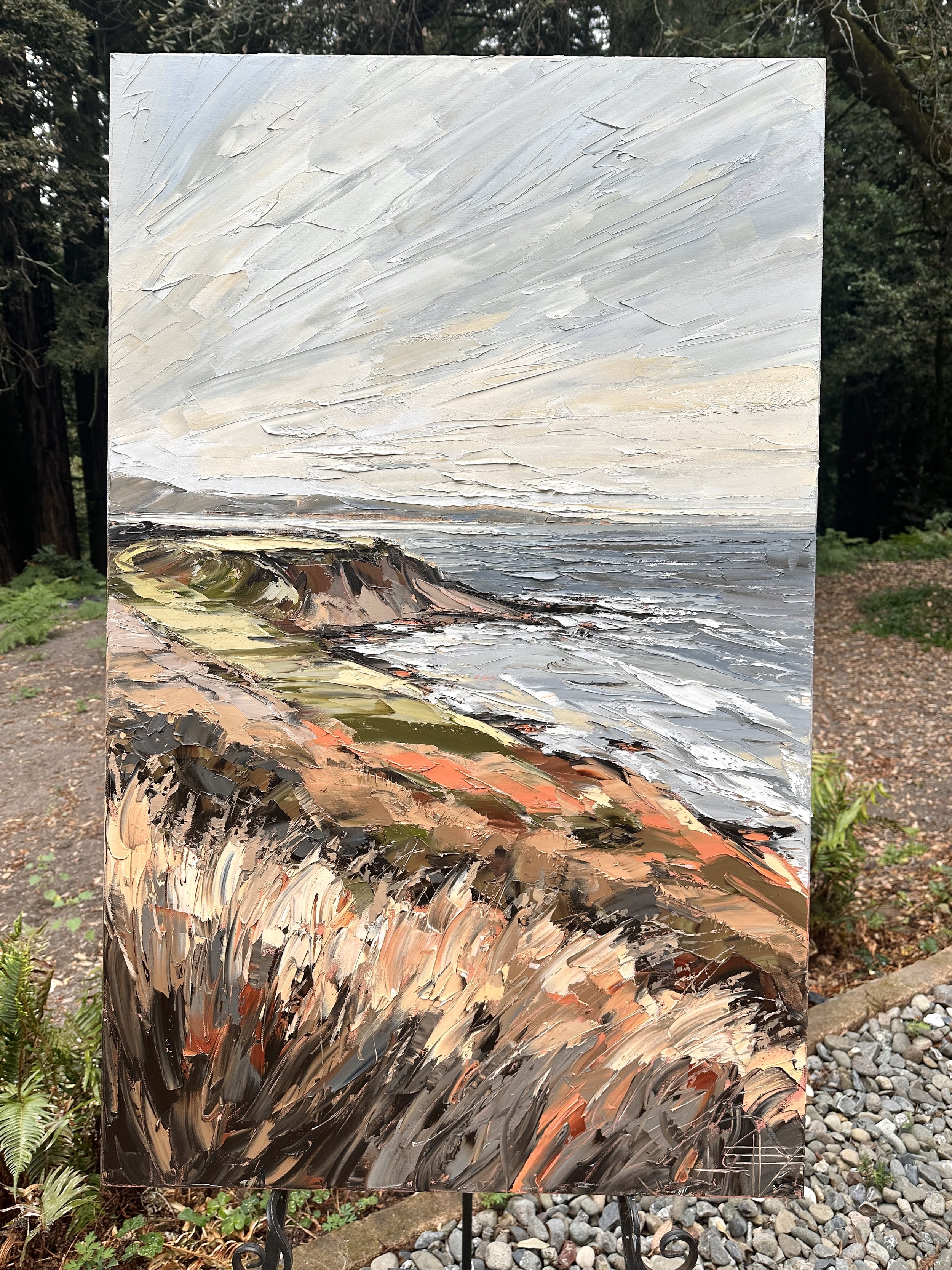
But as our conversation developed, we began looking closer to home—and the concept evolved toward Pebble Beach’s iconic seventh hole.
Finding the Right Inspiration
Turnberry and Pebble Beach share many of the qualities that first drew us to the idea: sculptural coastal landforms, weathered grasses, expansive ocean and a sense of the landscape opening toward the horizon.
Pebble Beach also allowed the painting to connect naturally with the California coastal subjects at the heart of my work.
The direction became clear: a refined coastal landscape with soft, luminous sky tones, muted greens, ocean blues and weathered earth colors. The fairway would be suggested through subtle shifts in value and color rather than treated as a rigid or overly literal feature.
It was still inspired by a recognizable place, but it would remain unmistakably an original Lisa Elley painting.
A Commission Is a Conversation
This evolution from Turnberry to Pebble Beach is a good example of how my commission process works.
A collector doesn’t need to arrive with every detail decided. We can begin with a room, a memory, a meaningful location, a color palette or simply a feeling they want the painting to create.
Room photographs help me understand scale and context. Fabrics, rugs and décor references can help establish a palette. Examples of my previous paintings reveal which aspects of my work the collector responds to most strongly—whether that is the color, atmosphere, composition, subject or texture.
From there, I interpret those elements through my own artistic language.
The initial photographs and visual references establish the direction, but the painting continues to evolve at the easel. Palette-knife work is physical and intuitive. Color relationships shift, texture creates movement and compositional decisions continue until the painting feels resolved.
That creative freedom is part of what makes a commission an original work of art rather than a reproduction of a photograph.
Creating a Painting for a Particular Space
The room matters, but it doesn’t dictate every decision.
My goal is to create a painting that feels deeply considered within its surroundings while remaining strong enough to stand entirely on its own.
For this office, the restrained coastal palette complements the existing interior without disappearing into it. The ocean and sweeping contours create openness, while the layers of impasto bring movement and physical presence to the wall.
Up close, the collector can see the individual palette-knife marks and shifts of color. From across the room, those marks settle into an atmospheric California coastline.
That relationship between the painting and the place where it will live is one of my favorite parts of creating commissioned work.
Commissioning an Original Painting
If you are considering an original painting for your home or office, you are welcome to begin with whatever you already have: a photograph of the room, approximate wall dimensions, a meaningful location or examples of my paintings you particularly love.
We can develop the direction together.
Send me a note with the word “Commission,” and I’ll personally send you my private Commission Guide with current pricing, sizing and details about the process.
REQUEST THE COMMISSION GUIDE →